
Window Sill Replacement and the Frame Repairs Around It
Sill Replacement
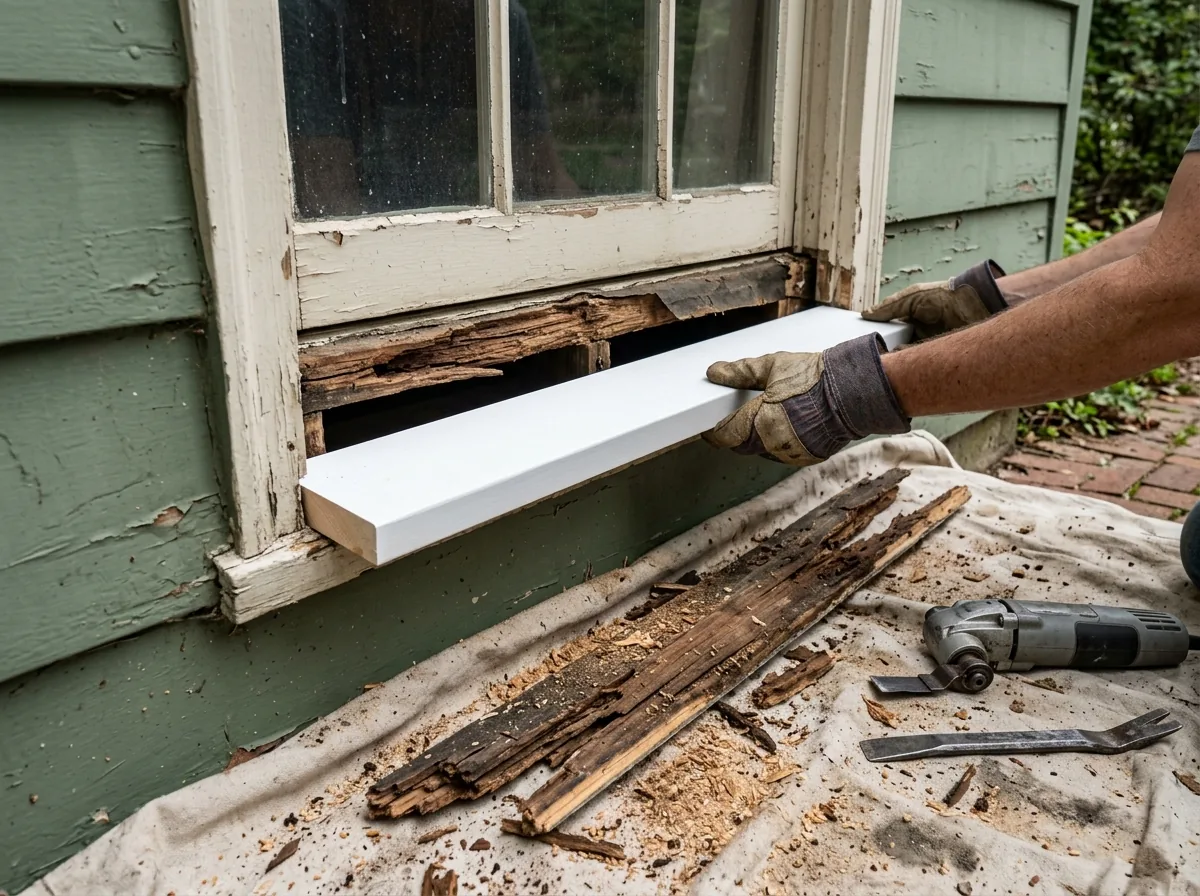
When rot runs through the sill, the window can stay and the sill goes. The old sill is cut into sections and split out from under the jambs, and the ends are worked free of the nails into the framing. A new sill is milled to the old profile, with the same slope and drip kerf on the underside, primed on every face, end grain included. It slides in under the jambs and gets fastened and sealed. The sash and glass don't need to come out.
The new sill has to shed water, so its slope matters as much as the wood. The National Park Service's repair guidance says any patched or rebuilt flat surface should slope slightly away from the window so water can't pool on it.
Jamb and Frame Repair
Rot that starts at the sill often climbs the bottom few inches of the side jambs, where water runs down and soaks into the joint. A carpenter can cut the jamb back to sound wood and splice in a matching piece (a dutchman) glued and fastened to the old one. When the frame is rotted all the way around, or the window is out of square in the opening, repair costs more than the window is worth and a full-frame replacement is the better buy. The install methods and per-window prices for that are on the retrofit window replacement page.
Epoxy Consolidant and Filler
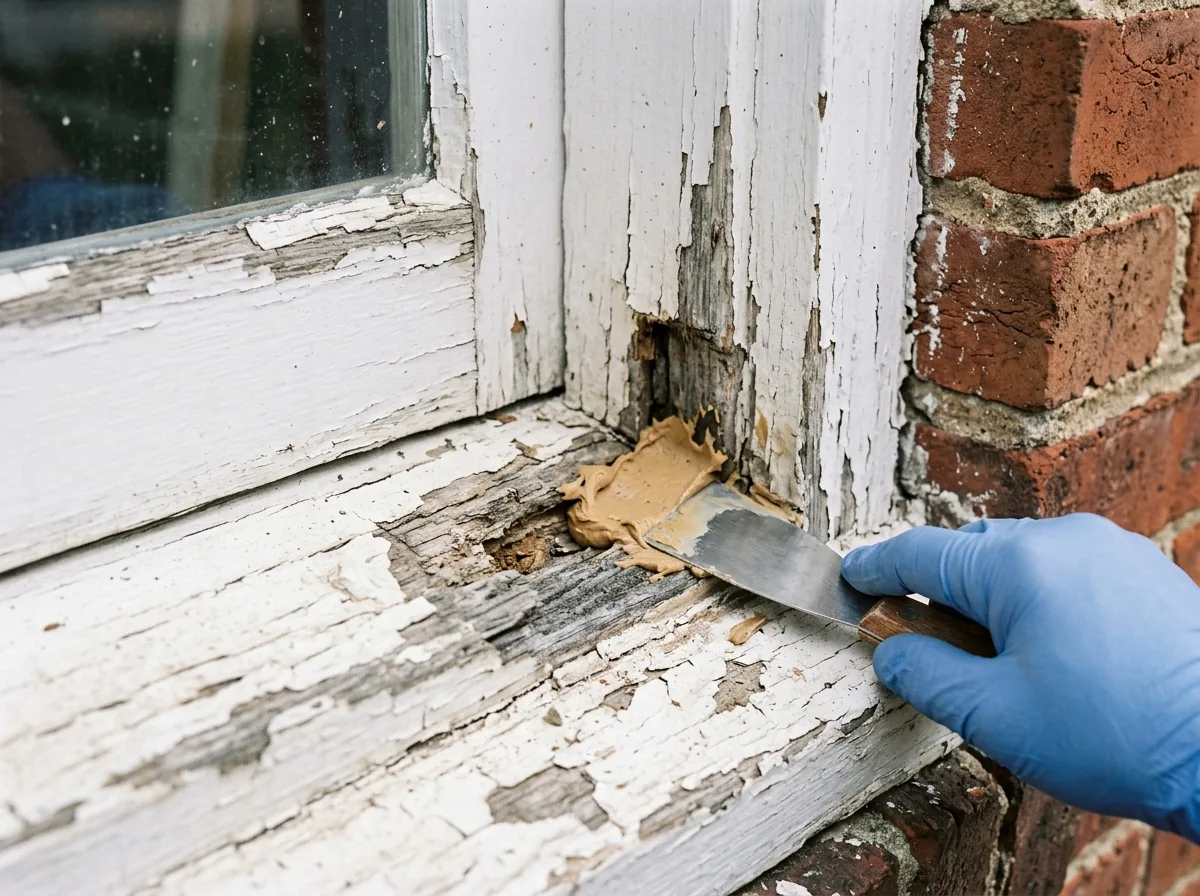
For rot that's shallow or caught early, epoxy saves the original wood. The Park Service describes the method: a semi-rigid epoxy consolidant soaks into the porous decayed wood and hardens, and then an epoxy patching compound fills the surface and is sanded and painted. It works on sill corners, the bottom of a jamb and the ends of brick mold. If the probe goes deep along much of the sill, epoxy only hides the problem.
Brick Mold and Exterior Casing
Brick mold is the thick molding around the outside of the window that meets the brick or siding. It takes the weather head-on and rots from the bottom up, at the joint where it sits on the sill. Replacing a length of it is quick, but it comes off with the caulk joint to the brick, so the job should end with backer rod and a fresh sealant bead, not just paint.
PVC Trim and Aluminum Cladding
Two ways to stop repainting. Cellular PVC brick mold and sill nosing can't rot and take paint well. Aluminum trim cladding (coil stock bent to cover the wood) is cheaper and common on older houses. It has one big catch: water that gets behind it can't dry out, so cladding over wood that was already soft just hides the rot while it spreads. Before anything gets wrapped, ask for the wood under it to be probed. Before an old cover is replaced, ask what's under it too.
Why Columbia homeowners call Columbia Window Co.
- Your request goes to one independent local window installer, not a list of callers
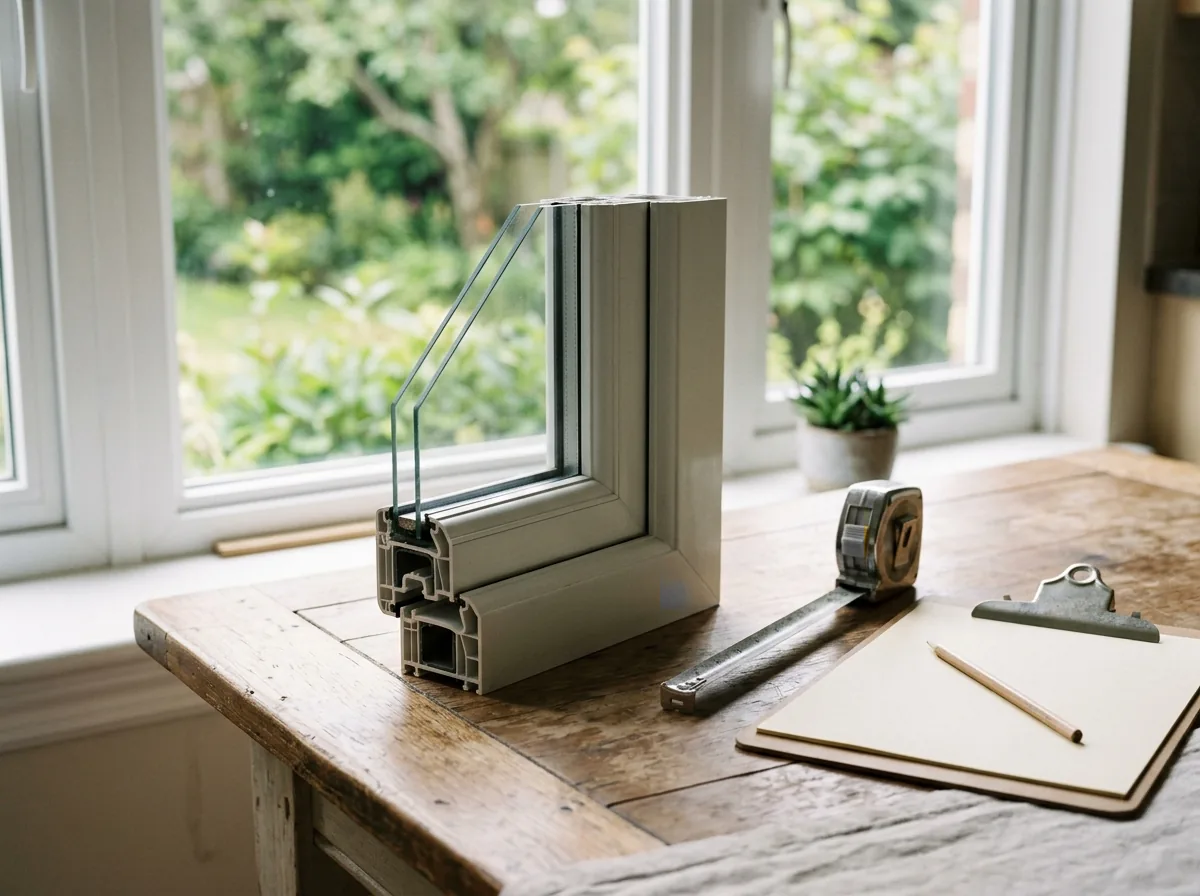
- The installer measures each opening in person before any price
- Ask for a written quote naming the frame, glass package and install method
- Free to homeowners: no fee for the referral or the estimate
Window Sill Rot and Columbia's Decay Hazard
Wood rot is a moisture problem, and Columbia has plenty of moisture. The Scheffer index rates how strongly a climate favors decay in wood used above ground. A U.S. Forest Service report works it out at 71.7 for Columbia, in the top band of its map (more than 65). Charleston, on the coast, scores 82.4. Heavy summer rain and long humid spells feed it, and the window leak repair page covers how that water gets into a window.
The same Forest Service report points out that modern windows often lack the sloped sills that older ones used to drip water clear of the wall. So a newer window on a soft sill isn't automatically safe. On older windows, the Park Service notes that decay usually starts on horizontal surfaces and at joints, where water can collect. That's the sill and the corners of the frame.
HomeGuide adds that moisture-damaged wood frames also tend to grow mold and attract termites, which makes a soft sill worth catching early.
Window Sill Probing: How the Decision Gets Made
A sill can look fine under paint and be mush inside. The Park Service's test is to push an ice pick or awl straight into the wood: if decay started from the hidden side, the pick goes through a sound-looking skin and deep into soft wood, which makes the test especially useful on sills, where you can't see the underside. Ask the carpenter to probe in front of you and mark the soft spots with tape.
Roughly how the result points:
Soft spots under the surface, solid core
Epoxy consolidant and filler, then primer and paint.Soft along the sill, sound jambs
A new sill let in under the old jambs.Soft sill and soft jamb bottoms
New sill plus jamb splices, or full-frame replacement if several windows look the same.Soft framing under the sill
Rot has reached the rough opening. Expect the wall framing and the sheathing to need repair before any window goes back.
On a house built before 1978, cutting into painted sills is paint-disturbing work that falls under the federal lead-safe rule. The historic window restoration page explains what that means for the job.
Window Sill Replacement Costs and the Quote
HomeGuide's national averages: window frame repair runs $150 to $600, wood frame reframing or patching $120 to $350, and a full sill replacement $150 to $400. When the window and frame both go, the guide puts it at $400 to $1,000. Your quote should name:
The material
Wood species or primed stock, or cellular PVC, for the sill and for the brick mold.The scope per window
Epoxy, sill only, sill plus jambs, or exterior trim, written for each opening, not one line for the house.Unknowns
What happens to the price if the rot reaches the framing under the sill.The finish
Primer on all faces, paint, and the sealant used at the brick or siding.