
Picture and Transom Window Styles
Large Fixed Picture Windows
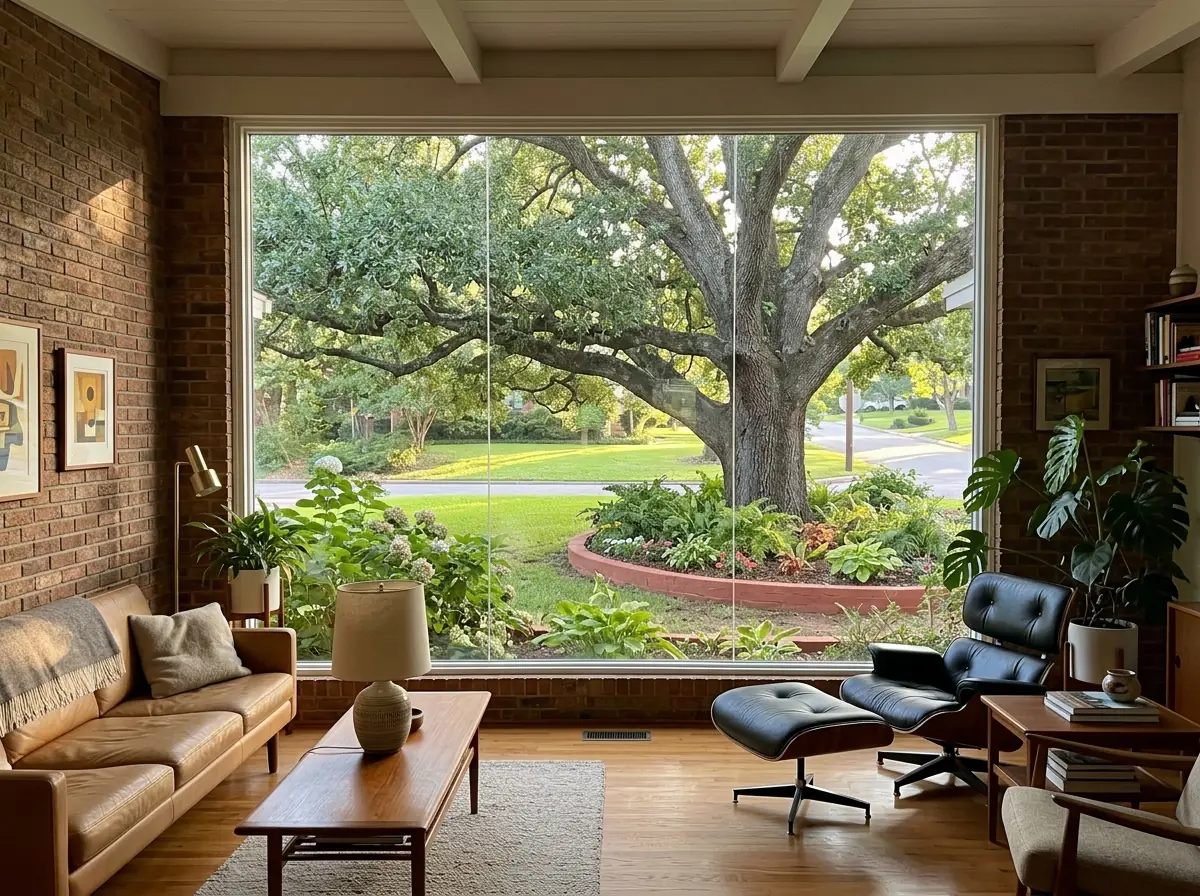
A picture window is just a frame and an insulated glass unit, with nothing that moves. HomeGuide notes that without working parts it costs less than an operable window of the same size, and the Department of Energy says a fixed pane installed properly is airtight. The trade-off is in the same sentence: no airflow, and no way out in an emergency. The big living-room window on many mid-century ranches is this style, and HomeGuide's picture window price table runs all the way to 8 by 8 feet. Units that size are heavy, and HomeGuide notes they can need extra hands and lifting gear on install day.
Picture Windows with Operable Flankers
The common answer to "I want the view and some air" is a picture window in the middle with an operable window on each side, mulled together into one opening. Casements are the usual flanker because they open fully and their frames can match the center unit's sightlines; double-hungs work on a more traditional front. An awning below the fixed glass is another option. The flankers are their own windows, with their own price, hardware and screens, so a three-unit opening is priced as three units plus the mull. Our casement and awning windows page covers those styles.
Transom Windows over Doors and Windows
A transom is a short window above a door or another window: a rectangle over a front door, or a strip above a picture window that carries the glass line up to the ceiling. Most are fixed. They bring daylight into halls and stairways without giving up wall space or privacy. Glass over or right beside a door can fall in a safety glazing location, so ask before ordering whether the transom needs tempered glass.
Arched and Half-Round Windows
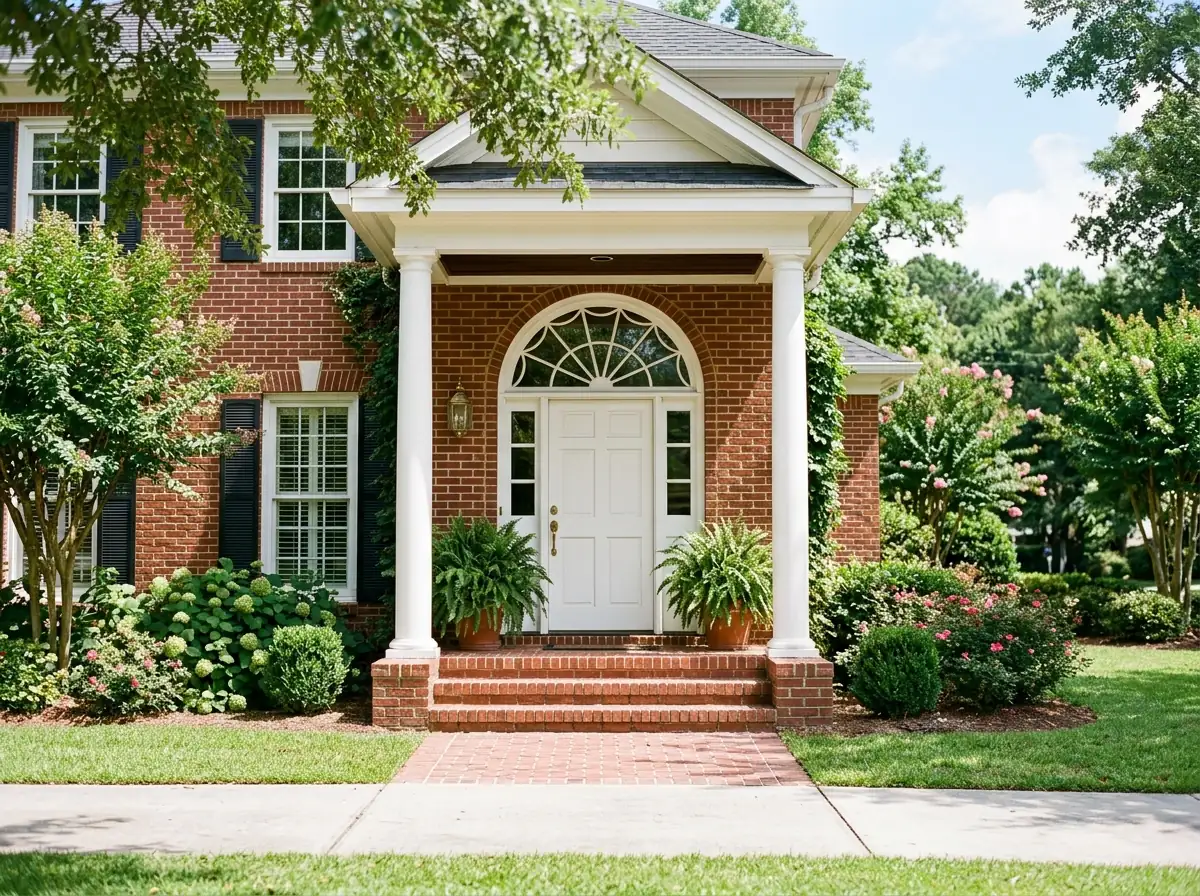
An arch tops a window with a curve: a full half-round, a quarter-round at a corner, or a flatter "eyebrow" segment. Modernize puts a standard-size arched window at $345 to $950 installed, nationally, with fixed arches running $300 to $1,000 and operable ones from $500 to several thousand. Arches are almost always measured with a template or careful radius readings, since a small error shows as a gap at the curve. Fan or sunburst grilles are common here and can be set between the glass or as simulated bars.
Custom Shapes: Trapezoids, Octagons and Rakes
Gable walls and vaulted rooms often have trapezoid or "rake" windows that follow the roof pitch, plus octagons, ovals and triangles. These are made to order from a template of the opening, so add lead time to the plan. HomeGuide notes that standard rectangles cost less to make than arched, round or custom shapes.
Why Columbia homeowners call Columbia Window Co.
- Your request goes to one independent local window installer, not a list of callers
- The installer measures each opening in person before any price
- Ask for a written quote naming the frame, glass package and install method
- Free to homeowners: no fee for the referral or the estimate
Picture Window Prices by Size and Shape
HomeGuide's national range for an installed picture window is $300 to $1,300, or about $20 to $50 per square foot of window. Size drives the price more than anything else. A 4-by-5-foot living room window is 20 square feet, which on that per-foot range is $400 to $1,000 installed. Push it to 8 by 6 feet and the same math gives $960 to $2,400, before any flankers.
Other things that raise a quote:
Shape
An arch, half-round or rake costs more than a rectangle of the same area.Glass
Tempered or laminated glass where a pane counts as a hazardous location, and a solar-control low-E coating on sunny walls.Mulling
Joining a picture unit to flankers or a transom adds mull bars, trim and labor.Access
Upper-floor and gable windows may need scaffolding or a lift.Opening work
Widening a wall for a bigger window means a new header, a different job from swapping a unit into the same opening; the permit side is covered on our retrofit window replacement page.
Picture Windows, Sun and Safety Glass
A big pane of glass facing west on a Columbia summer afternoon is a heat source. Because a picture window is all glass, the coating on it matters more than on a smaller sash window. Ask for the solar heat gain coefficient on the NFRC label, and pick it for the side of the house the window faces. Our energy-efficient windows page sets out the numbers to look for in this climate.
Safety glass is the other rule. Large panes that sit low to the floor, glass near doors, and glass by stairs or tubs can all count as hazardous locations that need tempered or laminated glass. The thresholds are on the sliding glass doors page, and a good installer will flag each pane that needs it before the order goes in.
Picture Window Measuring and Install Day
- STEP01
Measuring
Rectangles get width and height at several points; arches and rakes get a template or radius readings. Ask whether the unit will be an insert in the old frame or a full new frame. - STEP02
Ordering
Shaped and oversized units are made to order, so the wait is longer than for stock sizes. - STEP03
Removal
The old unit comes out. A large insulated glass unit is heavy, so a big picture window takes more than one installer. - STEP04
Setting
The 2021 residential code says windows go in per the maker's written instructions, with the opening flashed. On a large fixed unit that means a sloped or flashed sill, shims only at the points the maker specifies, and flashing tape lapped so water runs out over it, not behind it. - STEP05
Sealing and trim
Low-expansion foam in the gap, a sealant joint outside, then trim. Ask to see the NFRC label before it's peeled off.