
Window Repair Jobs, Part by Part
Most window problems trace back to one worn part. Ask for that part to be named on the work order; it makes the next repair faster.
Sash and Balance Repair
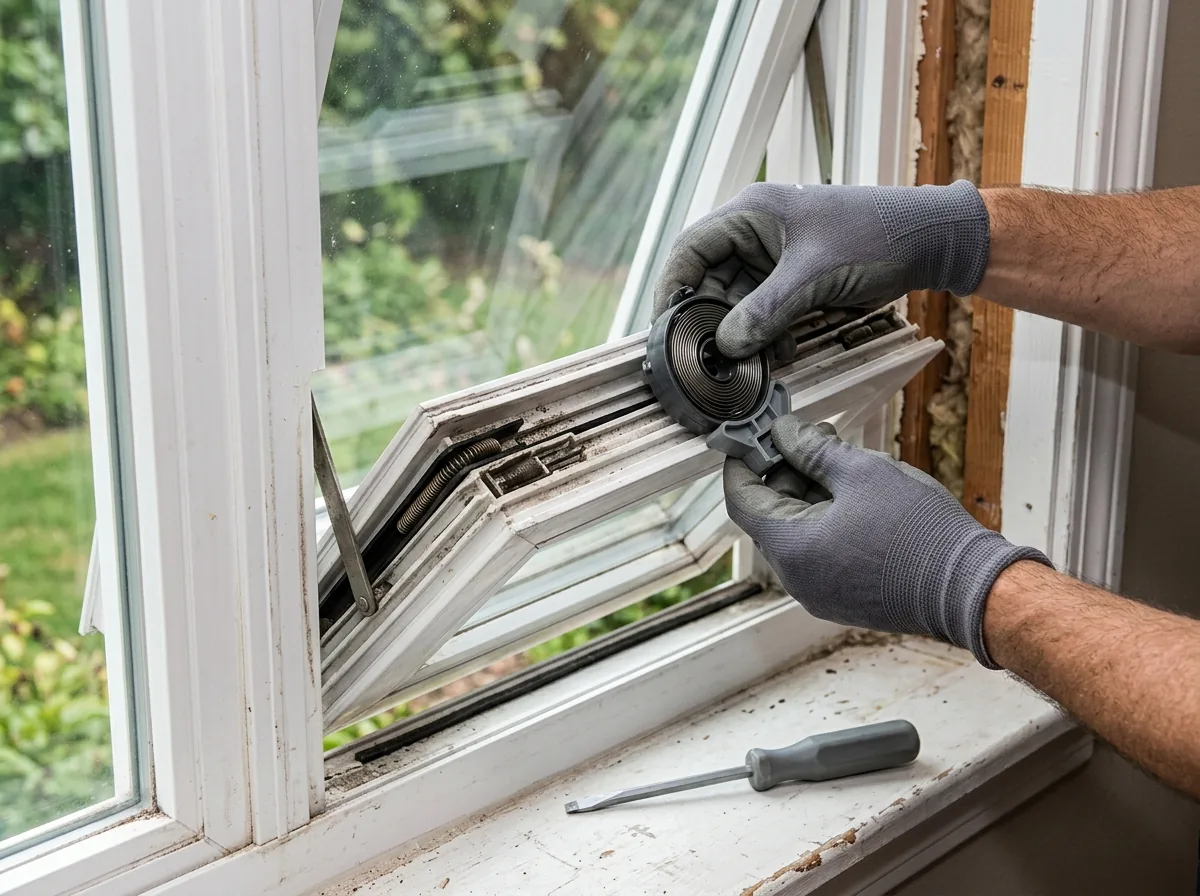
The balance is the spring in each side jamb that holds a hung sash where you leave it. Channel balances, also called block-and-tackle, use a spring and pulley inside a metal channel. Coil or constant-force balances use coiled springs anchored to a pivot shoe. Spiral balances use a hand-wound rod in a tube. Older rod balances are an outdated style that can be swapped for a channel balance.
Each balance is rated for a sash weight, and channel balances carry a strength code stamped on the channel. Both sides should be replaced together: a new balance on one side and a worn one on the other overloads one of them, and it breaks early. On older wood windows the same job is done by cords, weights and pulleys hidden in the jamb.
Cranks, Operators and Hinges
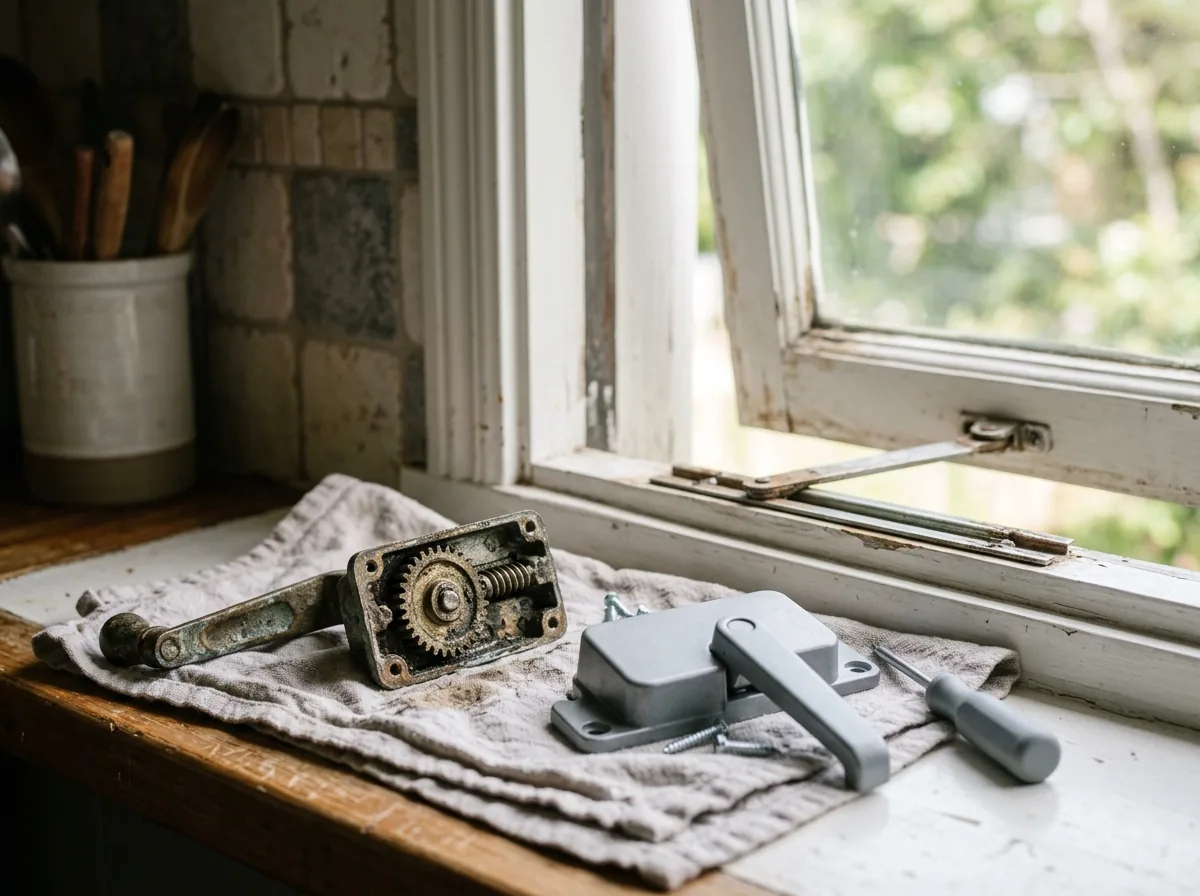
Casement and awning windows open on a crank operator with a gear and arm, and the sash rides on hinges along the top and bottom. A stripped crank spins without moving the sash. A sagging hinge drags the sash on the frame, which strips the crank faster and lets the window close out of line with its weatherstripping. A good tech will check the hinges whenever an operator has failed. The window style itself is covered on casement windows.
Locks, Latches and Hardware
On a hung window the sash lock is part of the seal: the cam pulls the two meeting rails together and presses them against the weatherstripping. A lock that won't reach its keeper usually means the sash has dropped or the frame has moved, so the fix may be adjusting the balance or the keeper rather than a new lock. Vinyl frames hold keeper screws in thin plastic walls, and a stripped screw hole is one reason a lock stops catching; the keeper can often be moved or anchored into a reinforced spot. Tilt latches on the top rail, which let a sash tip in for cleaning, crack with age and are cheap to replace.
Broken and Cracked Glass Replacement
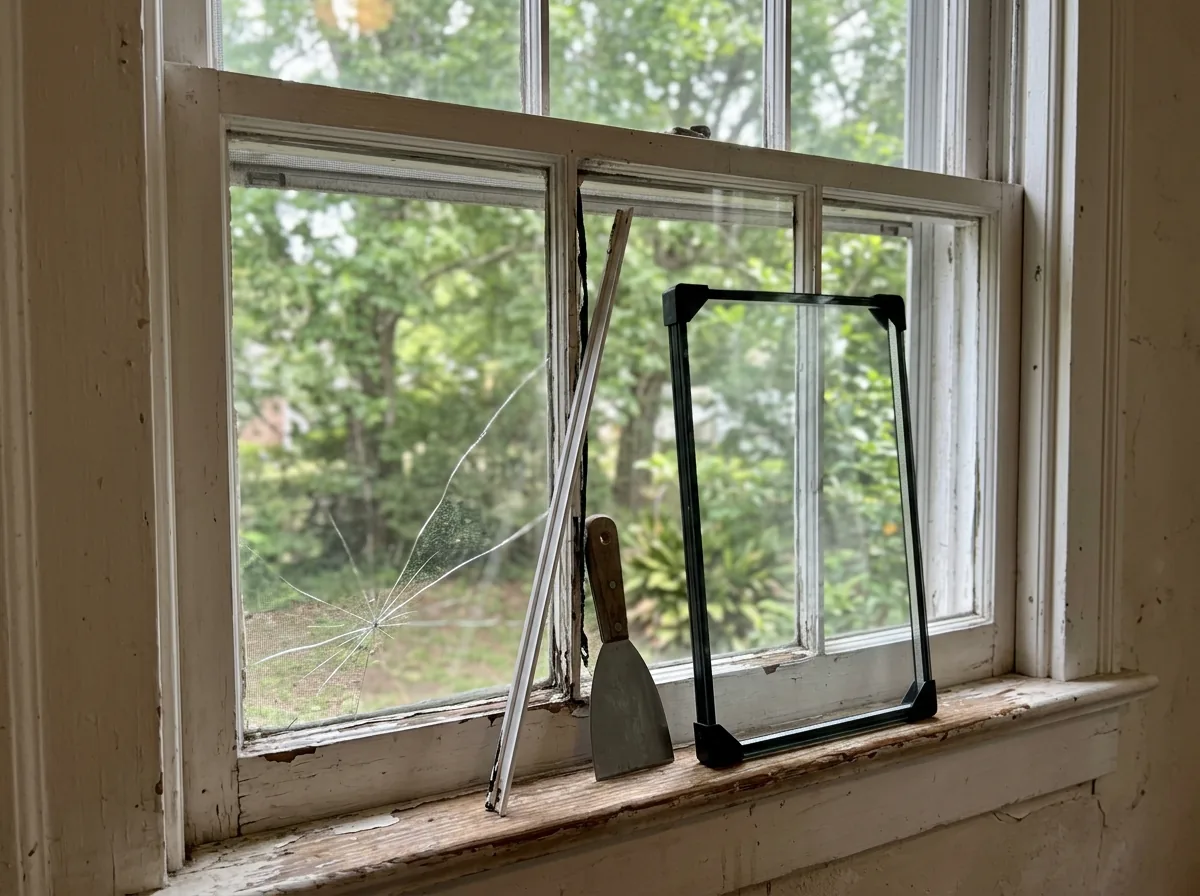
A broken pane is replaced in the existing sash. HomeGuide prices a single pane at $300 to $650 and a double-pane unit at $150 to $1,500 or more, nationally. A small crack sometimes doesn't need new glass at all; repairing a cracked pane runs $70 to $175. Where the window sits in a spot the code treats as hazardous, the new glass has to be safety glass, which adds $100 to $300 on a large pane. The locations are listed on sliding glass doors.
Fog between the panes is a different problem: the glass is intact but its seal has failed. That repair is on foggy window repair.
Weatherstripping and Glazing Beads
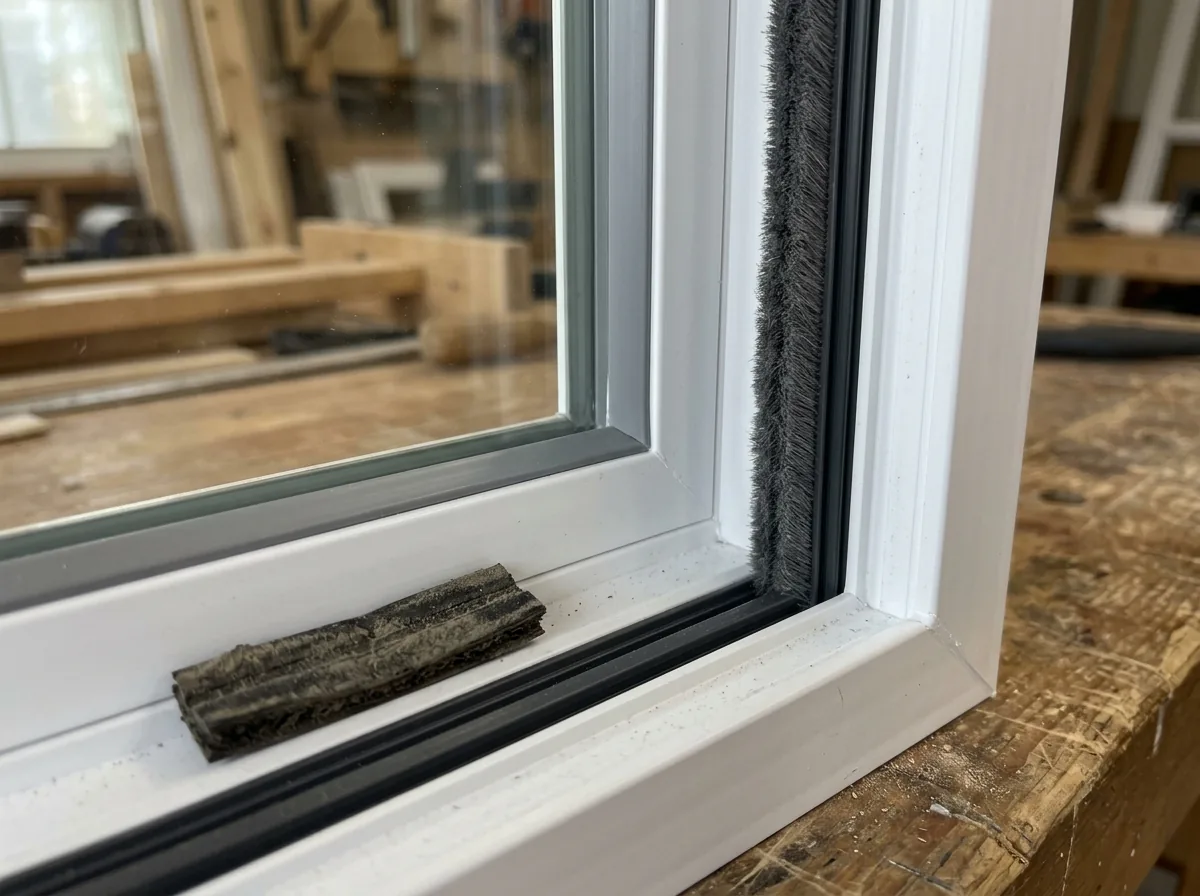
Weatherstripping is the pile, bulb or fin strip where the sash meets the frame, and it flattens and tears with years of use. New weatherstripping costs $5 to $10 per window, one of the cheapest fixes for a draft. Glazing beads are the snap-in strips that hold the glass in a vinyl or aluminum sash. In sun they turn brittle and shrink back from the corners, and water gets behind the glass. Replacing them, or the glazing tape behind them, is part of most glass jobs.
Emergency Board-Up
A pane broken by a storm limb, a ball or a break-in leaves the house open. The first visit closes the opening with plywood or a temporary panel cut to the frame, and the tech measures for the glass at the same time. Expect after-hours work to cost more: HomeGuide says emergency glass work at night, on weekends or on holidays often runs 50% to 100% above standard rates.
Why Columbia homeowners call Columbia Window Co.
- Your request goes to one independent local window installer, not a list of callers
- The installer measures each opening in person before any price
- Ask for a written quote naming the frame, glass package and install method
- Free to homeowners: no fee for the referral or the estimate
Window Repair Prices by Part
HomeGuide puts most home window repairs at $175 to $600 nationally, and lists these by part:
Balance or spring
$50 to $100.Hardware or latch
$75 to $200.Sash or track
$200 to $500.Frame repair
$150 to $600.Flashing repair
$270 to $570.Labor
$45 to $90 an hour for a window repair service.
Glass prices are in the glass section above. These are national per-window averages, so ask how a visit covering several windows is priced.
Window Repair Visits: How They Usually Run
- STEP01
Photos first
A picture of the whole window, one of the jamb with the sash tilted in or opened, and any label or stamp you can find on the balance, operator or glass edge. It lets the tech bring likely parts on the first trip. - STEP02
Diagnosis on site
The tech identifies the part, the window maker if a label survives, and whether the frame around it is sound. - STEP03
Stock parts the same visit
Common balances, locks, tilt latches and weatherstripping are often on the truck. - STEP04
Ordered parts on a second visit
Sealed glass units, discontinued operators and odd-size balances are measured and ordered, with a board-up or temporary fix in between if needed. - STEP05
Check before sign-off
Run each repaired sash through its full travel, tilt it if it tilts, and lock it before the tech leaves.
Window Repair Versus Replacement for Columbia Houses
HomeGuide's view is that windows 15 to 20 years old are better replaced than repaired. We'd put it another way: repair what's broken when the frame is sound and the problem is one part on a few windows. If the same failure shows up across the house, the frames are soft, or parts for that window can't be identified, price retrofit window replacement next to the repair.
Columbia's long humid summers set the usual repair list. Wood sashes swell and stick in August and rattle in January. Pine pollen and grit pack into tracks and sills, so a slider or a hung sash that drags often needs cleaning and new rollers or balances, not a new window. Paint is the other one. Many older sashes have been painted shut, and freeing them on a house built before 1978 is paint disturbance, which brings in the lead-safe rules on historic window restoration.
A repair visit should leave a short written record:
Parts
The balance kind and strength code, operator or lock model, so the next repair starts from the same parts.Pairs
Whether both balances on each sash were replaced.Glass
Tempered, laminated or annealed, low-E or clear, and the unit size.Anything found
Soft sills, failed seals on other windows, or water stains, noted even if not fixed that day.