
Energy-Efficient Window Glass and Frame Options
The glass decides most of a window's performance, and the coating that suits a house in the far north is the wrong one for a sunny Columbia wall.
Low-E Coatings: Solar-Control vs High-Gain
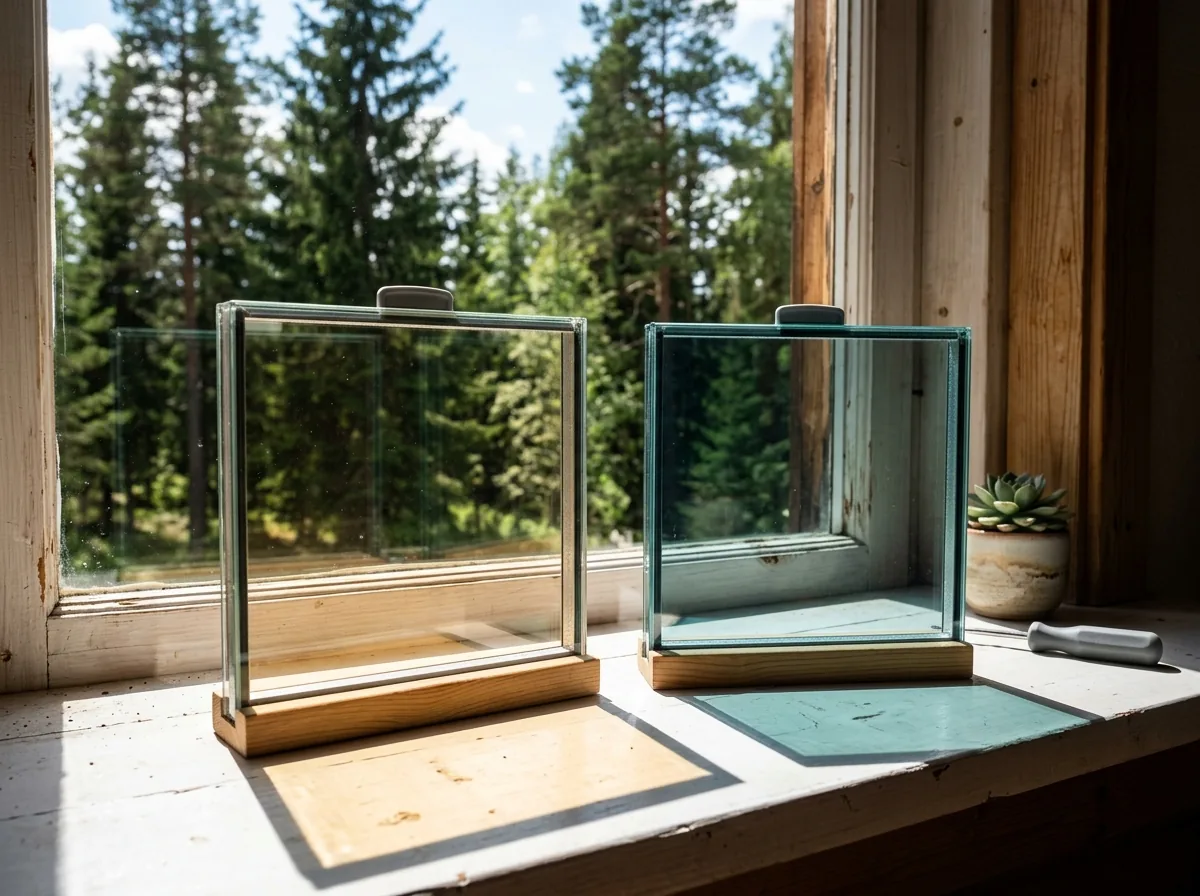
A low-E coating is a microscopically thin metal or metal-oxide layer on one of the glass surfaces. It lowers the U-factor and controls how much solar heat gets through, and coatings are made for high, moderate or low solar gain. In warm climates, the Department of Energy says to pick coatings that cut heat gain. The better ones are spectrally selective: they filter out 40% to 70% of the heat that normal insulated glass lets through while keeping the daylight. Low-E windows typically cost about 10% to 15% more than regular ones and can reduce energy loss by 30% to 50%.
High-gain coatings let winter sun in on purpose. They're built for heating climates. For south- and west-facing glass in Columbia, we'd ask for a solar-control (low-gain) coating every time.
Argon and Krypton Fills
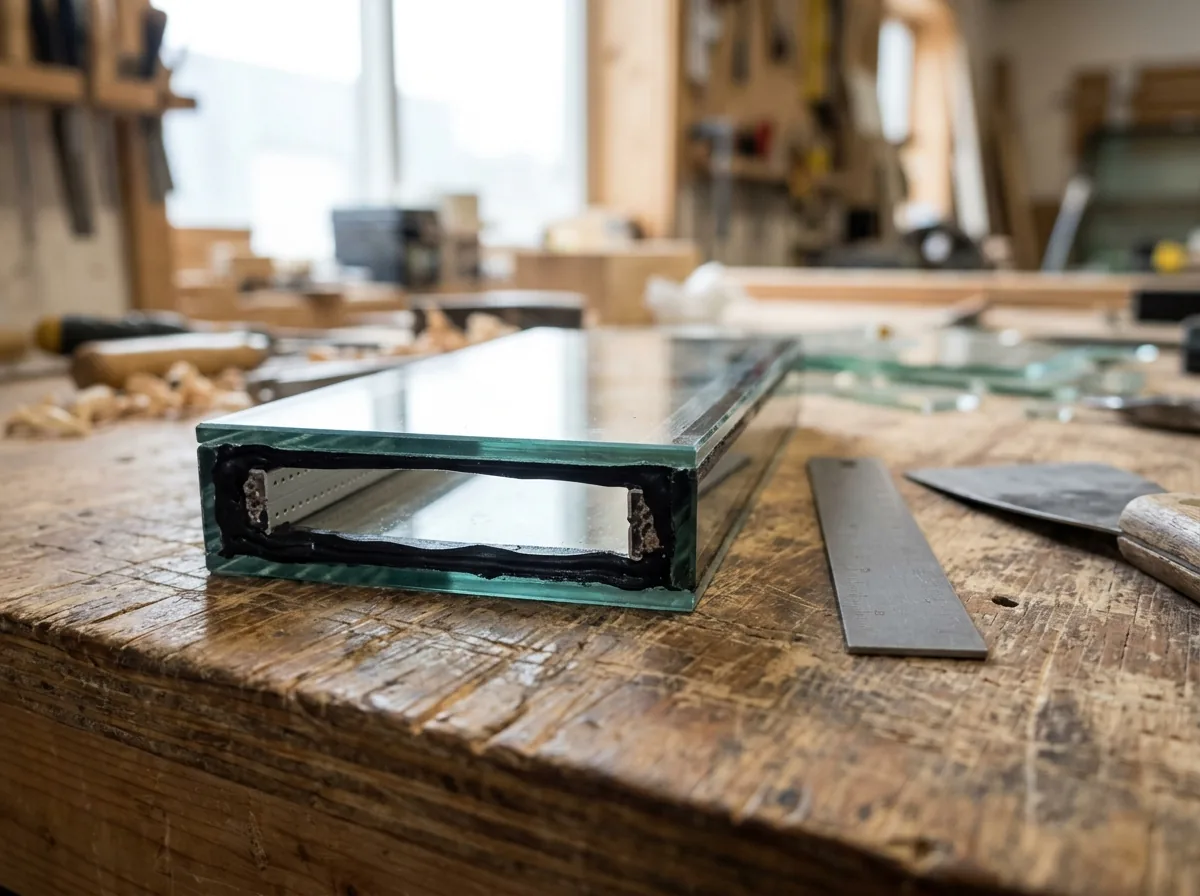
The space between the panes, usually about half an inch, is filled with argon or krypton, both inert, clear and odorless. Argon is the common choice because it's cheap and works well in that half-inch gap. Krypton performs better in thinner gaps of about a quarter inch, and costs more, so it mostly shows up in triple-pane units where the gaps are narrow. Either one stays put only as long as the edge seal holds; when it fails, the unit fogs, and that repair is on foggy window repair.
Warm-Edge Spacers
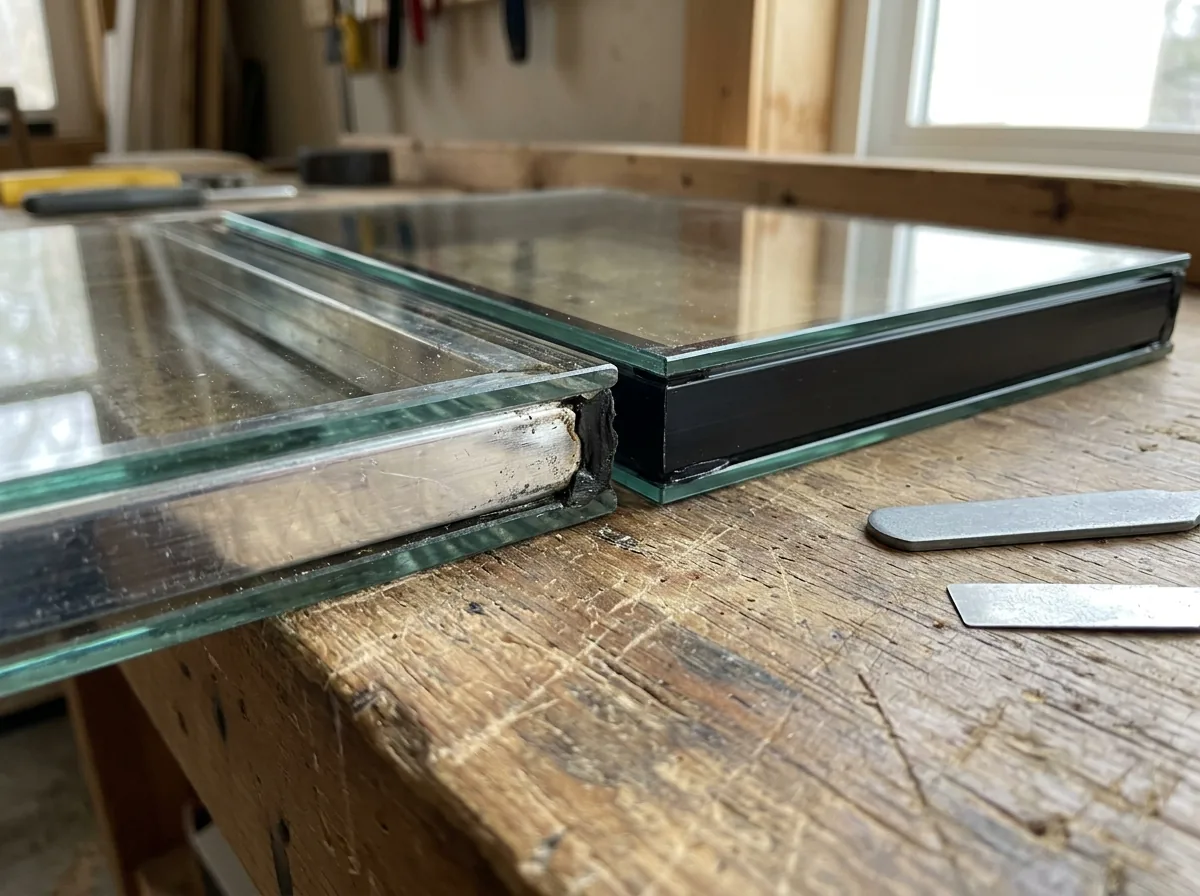
Spacers hold the panes apart and, with their sealant, keep the gas in and moisture out. Plain metal spacers are common and conduct heat straight through the glass edge. Warm-edge spacers blend metal and non-metal materials, and fully non-metal spacers block the most heat. The Department of Energy recommends warm-edge spacers because they lower the U-factor and reduce condensation at the edge of the glass. Ask what the spacer is made of; it's often left off the quote.
Double vs Triple Pane
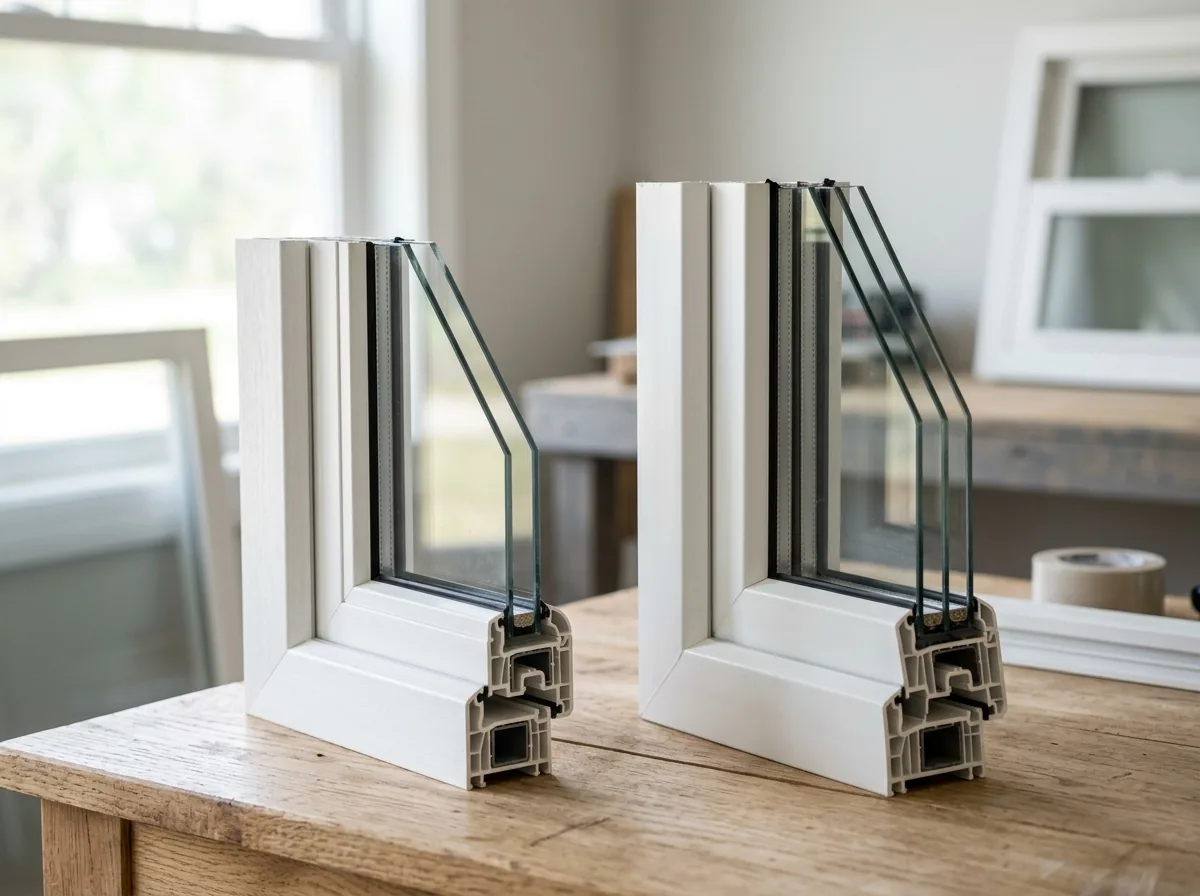
Nearly all new efficient windows use double or triple glazing. HomeGuide's national prices run $400 to $2,000 per window for double-pane and $450 to $3,000 for triple-pane. The third pane mainly buys a lower U-factor. Columbia's climate isn't one-sided: the normals show 2,236.6 cooling degree days and 2,472.6 heating degree days a year, so winter counts too. Even so, a good double-pane, solar-control low-E unit with argon and a warm-edge spacer reaches the ENERGY STAR mark for this zone. A third pane also adds weight that the frame and balances have to carry. If the goal is a quieter bedroom rather than a cooler one, the glass for that is on soundproof windows.
Frames and Air Leakage
Vinyl, wood, fiberglass and some composite frames resist heat flow far better than metal. An aluminum frame needs a thermal break, a plastic strip between its inside and outside, to avoid conducting heat. Air leakage is rated separately, and ENERGY STAR windows have to hold it to 0.3 cfm per square foot or less. Casements and awnings press their sash against the frame to close, so they generally leak less air than sliders. The frame materials themselves are compared on vinyl windows and the other material pages.
Why Columbia homeowners call Columbia Window Co.
- Your request goes to one independent local window installer, not a list of callers
- The installer measures each opening in person before any price
- Ask for a written quote naming the frame, glass package and install method
- Free to homeowners: no fee for the referral or the estimate
Energy-Efficient Windows: Code Minimum and ENERGY STAR in Columbia
South Carolina doesn't use the residential code's energy chapter. By state law its energy standard is the 2009 International Energy Conservation Code. Richland County is in climate zone 3, where that code's prescriptive path allows windows with a U-factor up to 0.50 and an SHGC up to 0.30. That's the minimum to pass inspection. Under the IECC, alterations to an existing house have to conform to the code as it applies to new construction, so replacement windows have to meet those limits as well.
ENERGY STAR asks for much more. Columbia falls in its South-Central zone, where Version 7 criteria, in effect since October 23, 2023, set the ceilings at U-0.28 and SHGC 0.23. A window at the code minimum lets in noticeably more solar heat than one at the ENERGY STAR mark. Our advice is to use the ENERGY STAR numbers as the floor in your quotes.
Money off is thin in 2026. The federal 25C credit, which covered ENERGY STAR Most Efficient windows up to $600, doesn't apply to anything placed in service after December 31, 2025. The state's HOMES rebate program names windows among its eligible upgrades, but no rebates were being paid as of October 2026, and Dominion Energy South Carolina's residential rebate list doesn't include windows.
Energy-Efficient Window Labels: Reading the NFRC Sticker
Every ENERGY STAR window carries NFRC ratings. On the label:
U-factor
Heat lost by conduction. Lower is better.Solar heat gain coefficient
The share of the sun's heat that gets in, from 0 to 1. In Columbia it's the number to watch on sunny walls.Visible transmittance
How much daylight comes through, from 0 to 1; higher means more light. Spectrally selective glass keeps it high while SHGC drops.Air leakage
Cubic feet of air per minute through each square foot of window; lower is tighter.Condensation resistance
Rated from 0 to 100.
Compare whole-window ratings, not center-of-glass figures, which flatter the glass and ignore the frame. A label alone doesn't prove a window is efficient; it reports the numbers, good or bad. ENERGY STAR suggests keeping the labels as records and asking installers to break the quote into labor and materials.
Energy-Efficient Windows and Columbia's Summer Heat
By the Department of Energy's figures, heat moving through windows accounts for a quarter to nearly a third (25% to 30%) of the energy a house uses for heating and cooling. In Columbia, summer is when that shows most. The airport's normal July high is 92.7°F, on average 80.8 days a year reach 90°F, and the July dew point averages close to 70°F, so air conditioners run long against both heat and humidity.
That makes SHGC the deciding number for south- and west-facing glass, where afternoon sun hits hardest. North-facing windows take little direct sun, so a lower U-factor matters more there than a very low SHGC. Glass can even be ordered by elevation. Replacing single-pane windows with ENERGY STAR units cuts household energy bills by an average of up to 13% nationally; going from old double-pane to new low-E saves less, but the rooms on the sunny side feel the difference first. For windows you're keeping, the Department of Energy's list starts with caulk and weatherstripping, storm panels, solar control film and exterior shade; storm windows and solar screens on window screen replacement cover the last two.