
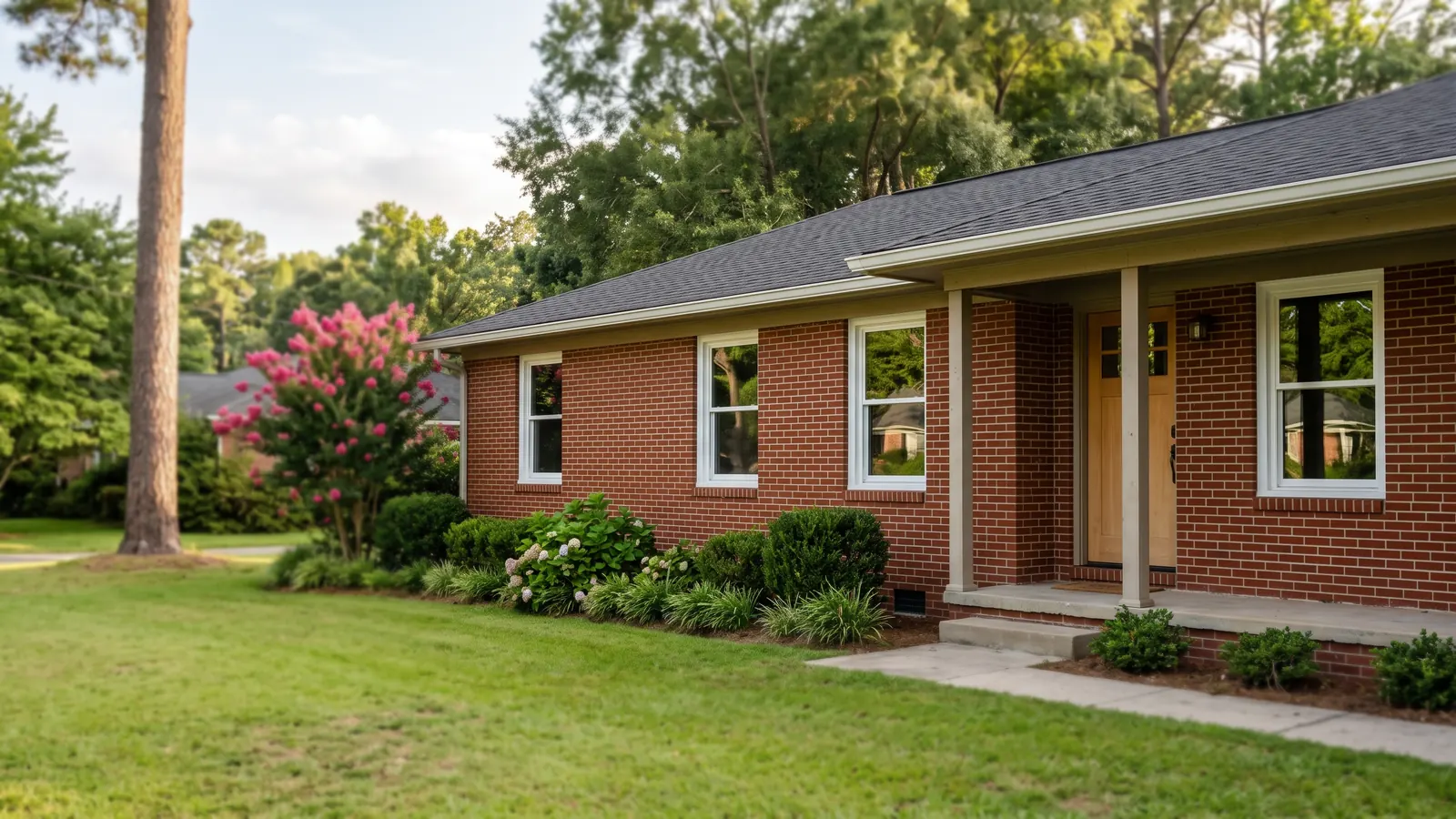
Casement and Awning Window Styles
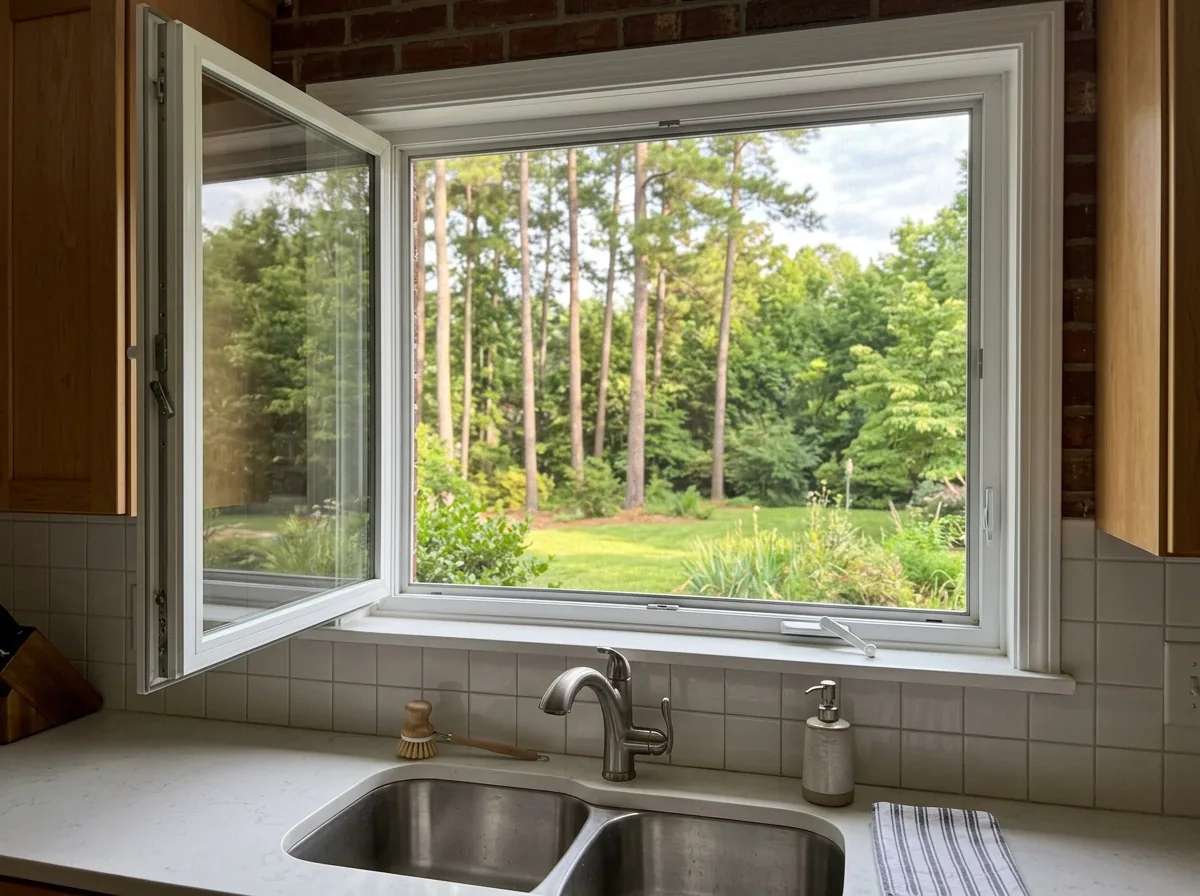
Crank-Out Casement Windows
The crank turns a gear in the operator, which pushes an arm along a track under the sash and swings it out. Because the whole sash clears the frame, a casement opens its full glass area to the breeze, and an open sash can catch air moving along the wall and steer it inside. HomeGuide puts an installed casement at $400 to $3,000 per window nationally. Over a kitchen sink or behind a counter, where you can't lean in to push a sash up, a crank is the easier reach. Pairs that open from the middle with no post between them are sold as double or French casements.
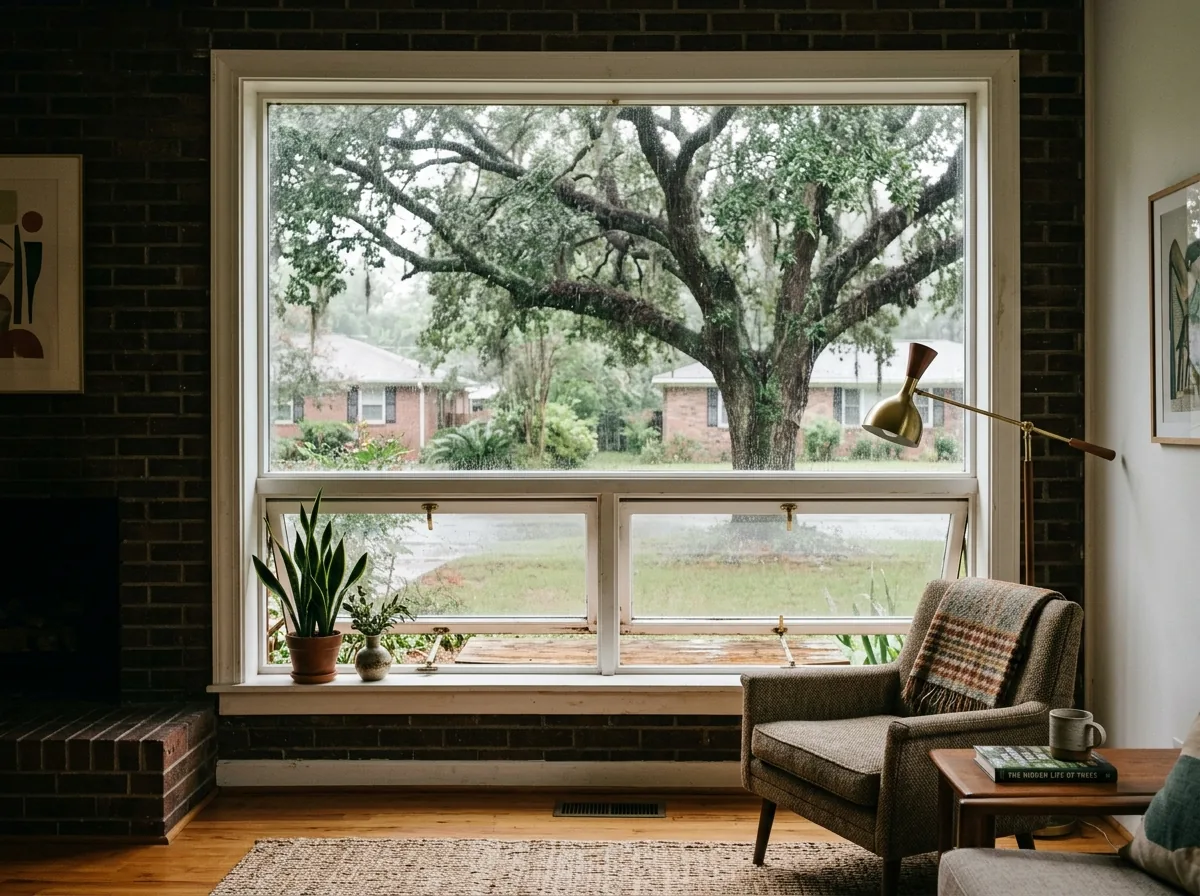
Top-Hinged Awning Windows
An awning swings out from the bottom, so the open sash acts like a little roof. That's why it can stay cracked open in a light summer shower without letting much water in. Awnings sit high in bathroom walls, over tubs and in basements, and HomeGuide notes they're often installed below large picture windows to add airflow under fixed glass. Its national range is $400 to $2,000 per window installed. One limit: an awning isn't the style for a window you'd ever need to climb out of, because the open sash sits in the way. If you're pairing one with fixed glass, see picture and transom windows.
Handle-Operated Push-Out Casements
Some casements skip the crank. You turn a handle to release the lock and push the sash open, and a friction hinge or a stay arm holds it where you leave it. HomeGuide lists them as an option when some sashes "may be pushed open and pulled closed." With no operator in the way of the sill, they suit a traditional or modern exterior with slim sashes. They do need a reach: on a deep sill or over a sink, a push-out sash is harder to close tight than one you crank.
Casements as Bedroom Escape Windows
Since a casement's sash swings clear of the opening, it gives more clear space than a hung or sliding window of the same frame size. That makes it a common fix for a small bedroom window that has to meet escape-opening rules, and HomeGuide notes some casements are built as egress units for that reason. The code sizes, and the exemption for like-for-like replacements, are on the egress windows page. Measure before trading a bedroom casement for a style that opens less.
Operators, Hinges and Multipoint Locks
The hardware is most of what separates a good casement from a bad one. Operators come in single-arm and dual-arm versions, plus dyad operators, and awning windows use an operator of their own. Hinges are usually 4-bar types, which on many casements slide the sash away from the hinge side as it opens and leave room to wash the outside glass from indoors. Locks are single-point, with one cam near the middle, or multipoint, which pulls the sash tight at several spots along the frame with one handle. Many casements can also take a window opening control device, a stop that holds a sash at a few inches and releases for a full opening.
Why Columbia homeowners call Columbia Window Co.
- Your request goes to one independent local window installer, not a list of callers
- The installer measures each opening in person before any price
- Ask for a written quote naming the frame, glass package and install method
- Free to homeowners: no fee for the referral or the estimate
Casement Windows in Columbia Weather
The Department of Energy says casements and awnings generally leak less air than sliding windows, because the sash closes by pressing against the frame instead of sliding past seals. On a humid August afternoon, that compression seal also keeps damp outside air from slipping through. Wind works in a casement's favor too: gusts push a closed sash harder into its weatherstripping.
There are trade-offs. An open casement sticks out from the wall, so on a narrow side yard or beside a walkway it can be in the way, and a strong gust can catch it. The screen goes on the inside of a casement, since the sash opens outward. And a house with stock hung windows can look very different with casements on the front. If the house sits in one of Columbia's historic districts, changing the style on the street side may need window review first; see historic window restoration for where that starts.
Casement Window Quotes, Line by Line
Hinged windows have more hardware than any other style, and that's where cheap and good units differ. Ask the quote to spell out:
Operator
Single-arm, dual-arm or dyad, and whether the gears are metal. A worn operator is the usual casement repair, and a window repair visit can often swap one without replacing the window.Hinges
4-bar or another type, and whether they're stainless steel. Columbia's damp summers are hard on plain steel.Locks
Single-point or multipoint. Taller sashes seal better with more locking points.Hinge side, opening by opening
Makers don't all name left and right from the same side of the wall, so check the drawing against where your furniture and walkways are.Opening limiters
Whether a window opening control device comes with upstairs units or can be added.Screens
Interior screen, full-size or roll-down, and the mesh type.Ratings
Each unit's NFRC sticker and its NAFS performance grade.
Casement Window Care
Keep the operator track under the sash free of grit and leaves, and keep the hinge arms clean. If a crank starts to slip, stop forcing it: a stripped gear can bend the arm. Check that the weatherstripping is soft and not torn once a year; on a compression-seal window, the seal does all the work. Close the lock every time rather than just cranking the sash shut, because the lock is what pulls the sash into that seal.