
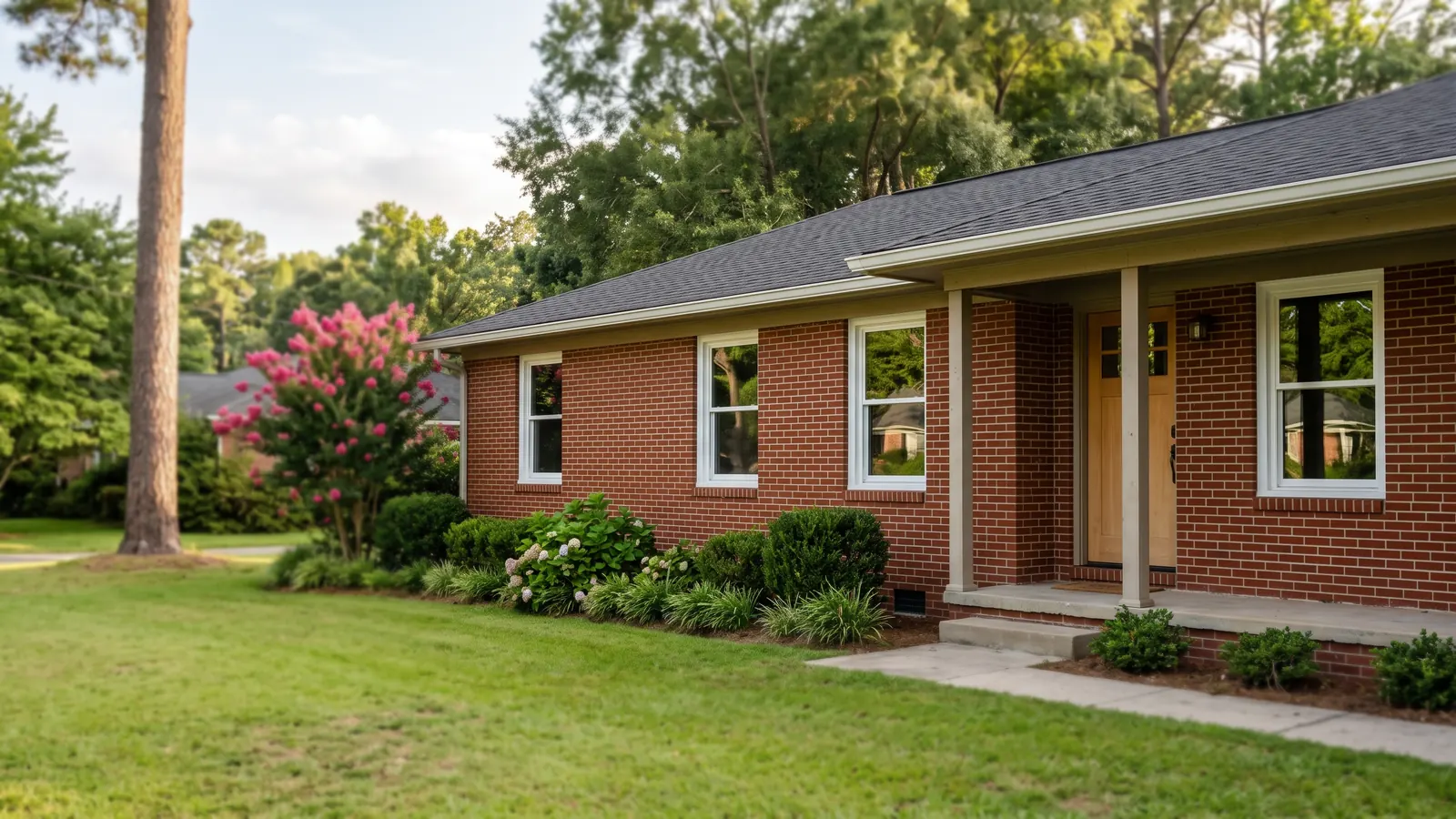
Window Leak Repair at Each Point Water Gets In
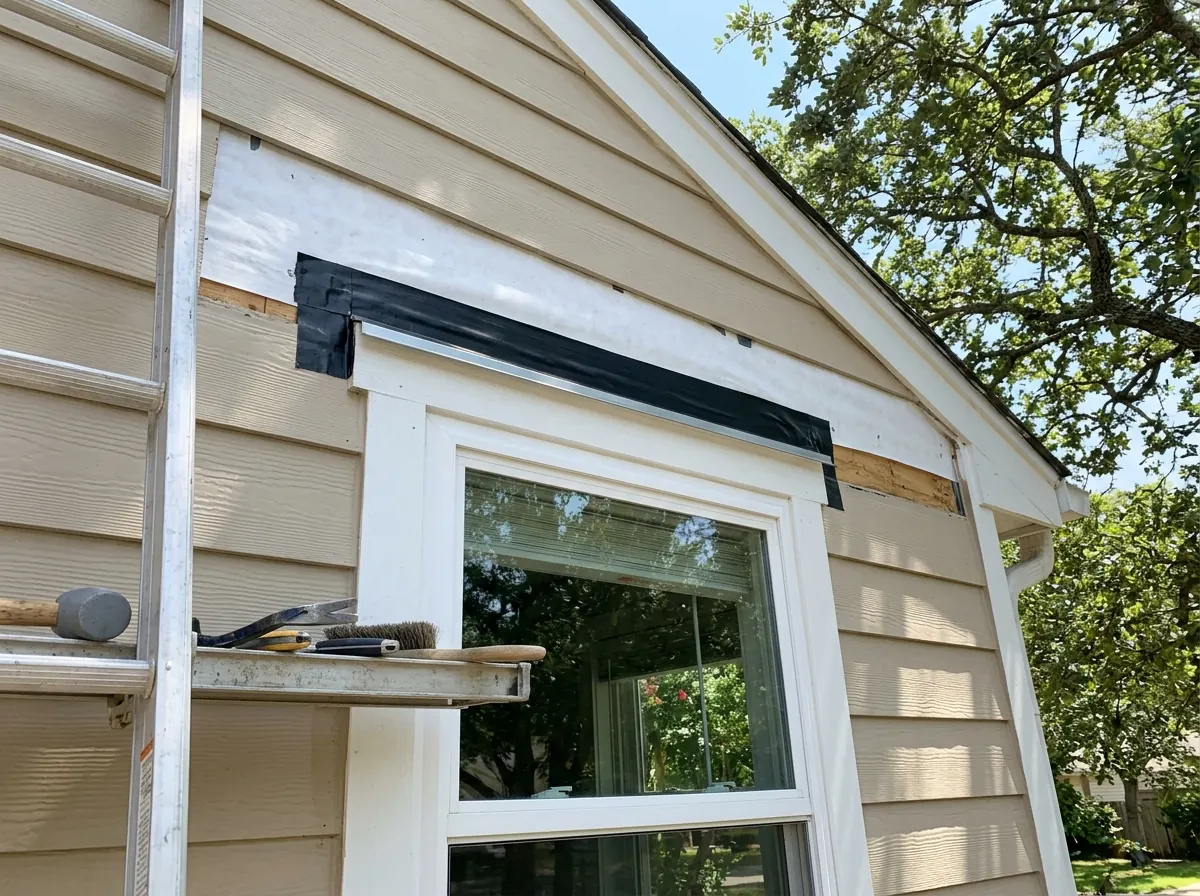
Head Flashing and Drip Cap
Water running down the wall above a window has to be steered out and over it. A drip cap (a bent metal or vinyl flashing on top of the head trim) does that, and the house wrap above it has to lap over the flashing, not tuck behind it. When the cap is missing or the laps run the wrong way, water gets behind the trim and shows up as a stain at the top corners of the window inside, or in the wall below it. The fix means removing siding above the window, so it costs more than caulk and lasts far longer.
Sill Pans
A sill pan is a flashing tray under the window that catches any water that gets past the frame and sends it back outside. ASTM E2112, the standard practice for installing windows, doors and skylights, gives a whole section to pan flashing and subsills. Older and many replacement installs have no pan at all. That's usually behind a stain on the floor below the window, or a soft subfloor. Adding a pan means taking the window out, so it's usually done when the window is being replaced or reset. Pans under patio door thresholds are covered on the sliding glass doors page.
Glazing and Glass-Seal Leaks
Some leaks come through the sash, not around it. Old wood windows leak where the glazing putty has cracked and fallen out. Newer windows can leak where the glazing bead or the bedding tape under the glass has pulled away. Water that gets into the glazing pocket and can't drain also sits against the edge of the insulated glass and wears the seal out. If the glass has fogged as well, the foggy window repair page covers the glass side.
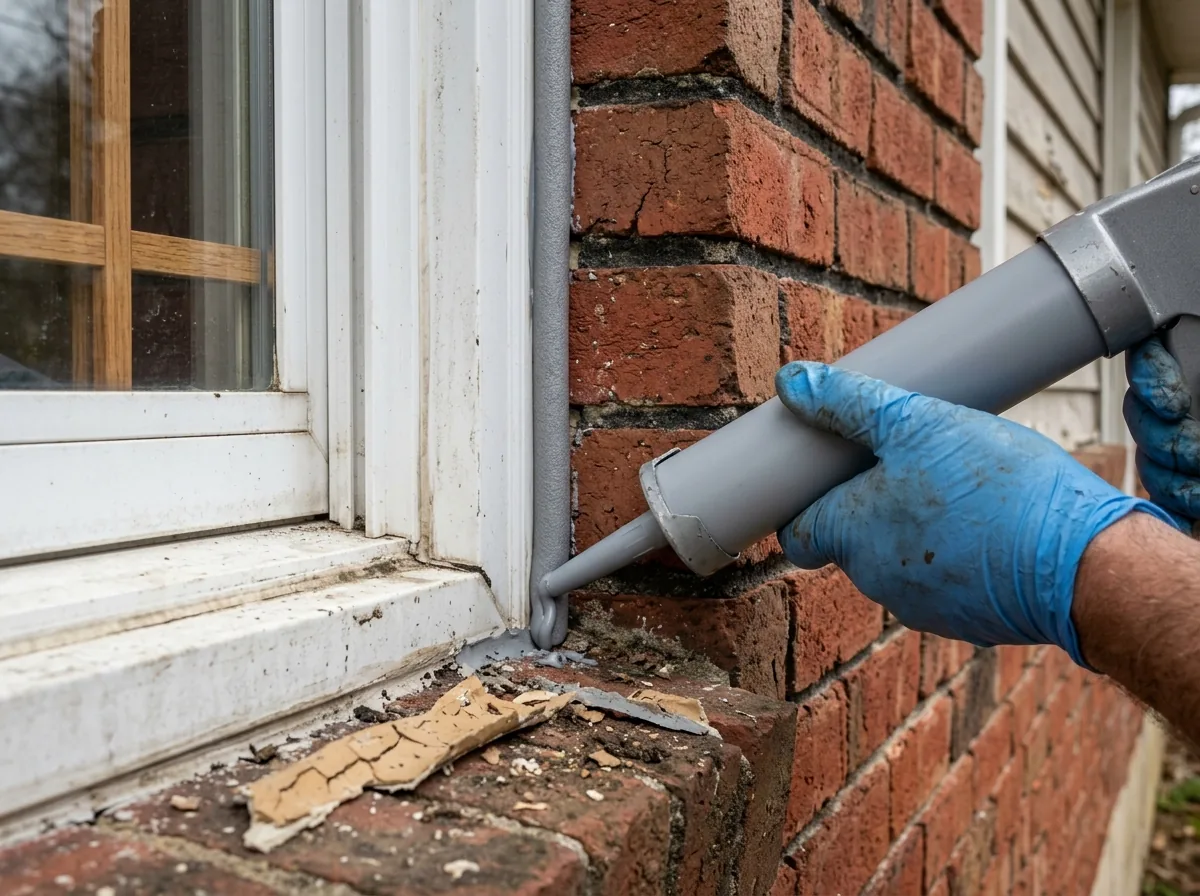
Sealant Joints: Silicone, Polyurethane and Backer Rod
The perimeter joint between the window and the brick or siding is a backup, not the main defense. But when it cracks, wind-driven rain goes straight through. A proper joint is cleaned out, gets a foam backer rod so the sealant bonds to two sides only, and is filled with an elastomeric sealant. ASTM C920 sorts these sealants into movement classes from 12.5 to 100/50. Ask for a C920 sealant rated for the movement of that joint. Silicone and polyurethane are the common choices. Painter's acrylic caulk isn't one of them.
Weep Holes
Vinyl and aluminum windows have small slots along the bottom of the frame that let water in the sill track drain out. When they're painted over, caulked shut or packed with dirt and pollen, the track fills and overflows indoors during a storm. This is the cheapest leak to fix: clear the weeps and check that the flaps move. Never caulk the bottom edge of a window or a storm window closed.
Water Testing
Guessing is how leaks get "fixed" three times. ASTM E1105 is the field test for water getting through installed windows, doors, skylights and curtain walls. Water is sprayed on the outside face while the air pressure outside is kept higher than inside, the way wind pushes on a wall. For a house, a simpler version is a hose test started low and worked up the window, one zone at a time, with someone watching inside. The standard notes it can't detect water you can't see, so a leak inside the wall may need the trim opened to confirm.
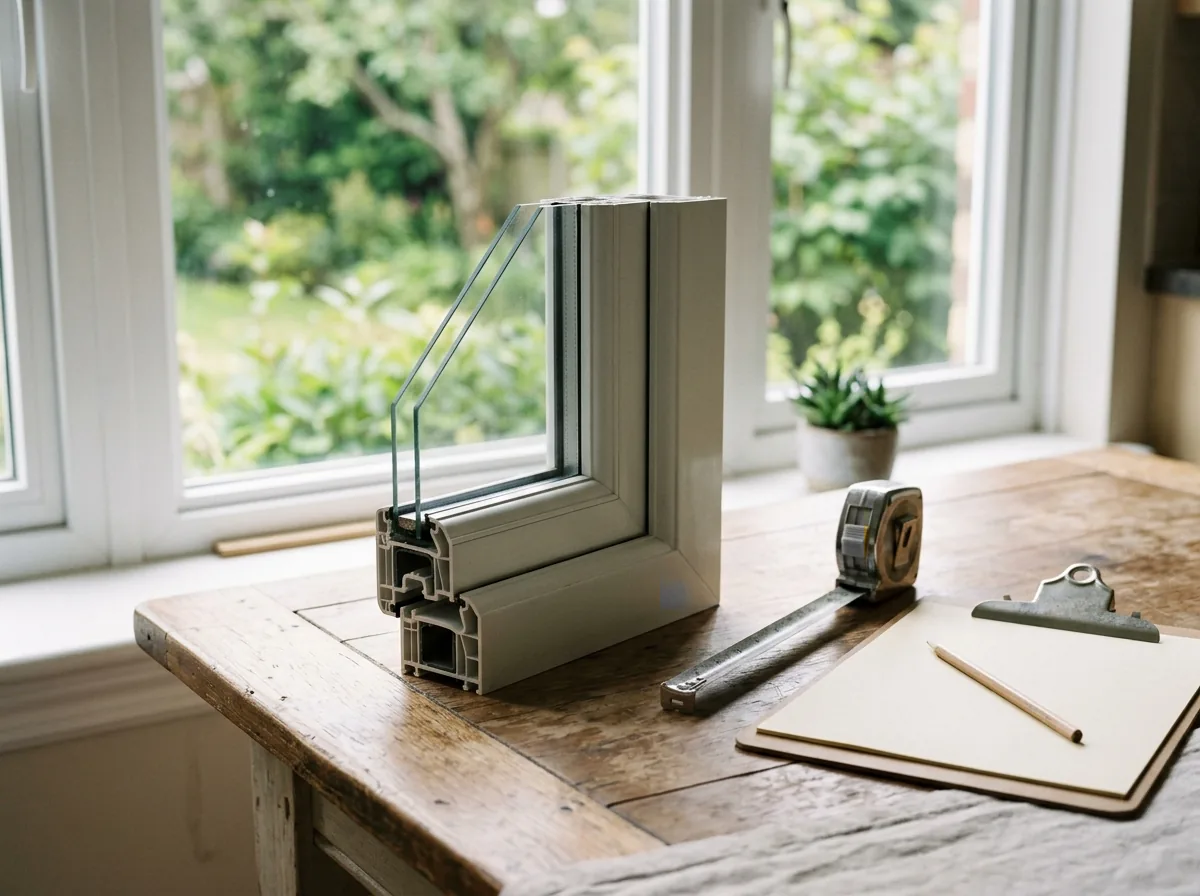
Why Columbia homeowners call Columbia Window Co.
- Your request goes to one independent local window installer, not a list of callers
- The installer measures each opening in person before any price
- Ask for a written quote naming the frame, glass package and install method
- Free to homeowners: no fee for the referral or the estimate
Window Leak Repair and Columbia Rain
Columbia averages 45.24 inches of rain a year in NOAA's 1991-2020 normals for the airport station. June through August bring about 15 of those inches, a third of the year, and July is the wettest month at 5.35 inches. Summer rain tends to come as thunderstorms, and storm wind pushes it sideways into the wall, at the same joints, every year.
Newer houses aren't immune. A U.S. Forest Service report on wood decay hazard points to two things working against modern windows. Contemporary windows typically no longer have the sloped sills that used to drip water off the jamb casings and clear of the wall. And energy-efficient construction, with less air leaking through the walls, has "inherently lower capability to dissipate rainwater leakage." A tighter wall dries out more slowly, so a small leak does more damage before anyone sees it. When the wood is already soft, the window sill replacement page covers the repair.
Window Leak Diagnosis, in Order
A good installer works from the cheapest likely cause to the most expensive and tests between steps:
- STEP01
Map the stain
Top corners point to the head. The floor below points to the sill or a missing pan. Water on the sill track points to blocked weeps. - STEP02
Check the outside
Cracked perimeter sealant, missing drip cap, gutters overflowing onto the window, sprinklers hitting it. - STEP03
Clear and seal
Open the weeps, replace failed sealant over backer rod, and reset loose glazing beads. - STEP04
Water test
Start below the window and work upward in zones until it leaks. - STEP05
Open up if it still leaks
Remove siding or trim to check the flashing laps, or pull the window to add a sill pan.
Old wood windows with putty glazing and painted-shut sashes are a restoration job more than a leak job; see historic window restoration. Leaks around a roof window are on the skylight replacement page.
Window Leak Repair Costs and the Written Scope
HomeGuide's national figures give a sense of the small jobs: recaulking a window frame runs $10 to $15 per linear foot, and fixing a broken or leaking nail fin $50 to $150. Flashing work that means removing siding, or pulling a window to add a pan, is priced per opening and depends on the wall.
Get the scope in writing, including:
Where the leak was found
and how it was tested, before and after.The sealant
by type and ASTM C920 class, and whether backer rod is used.Flashing
What gets added or relapped at the head and sill, and which installation standard (ASTM E2112 or the window maker's instructions) the work follows.Hidden damage
What happens if the sheathing or framing under the window is wet or rotted.