
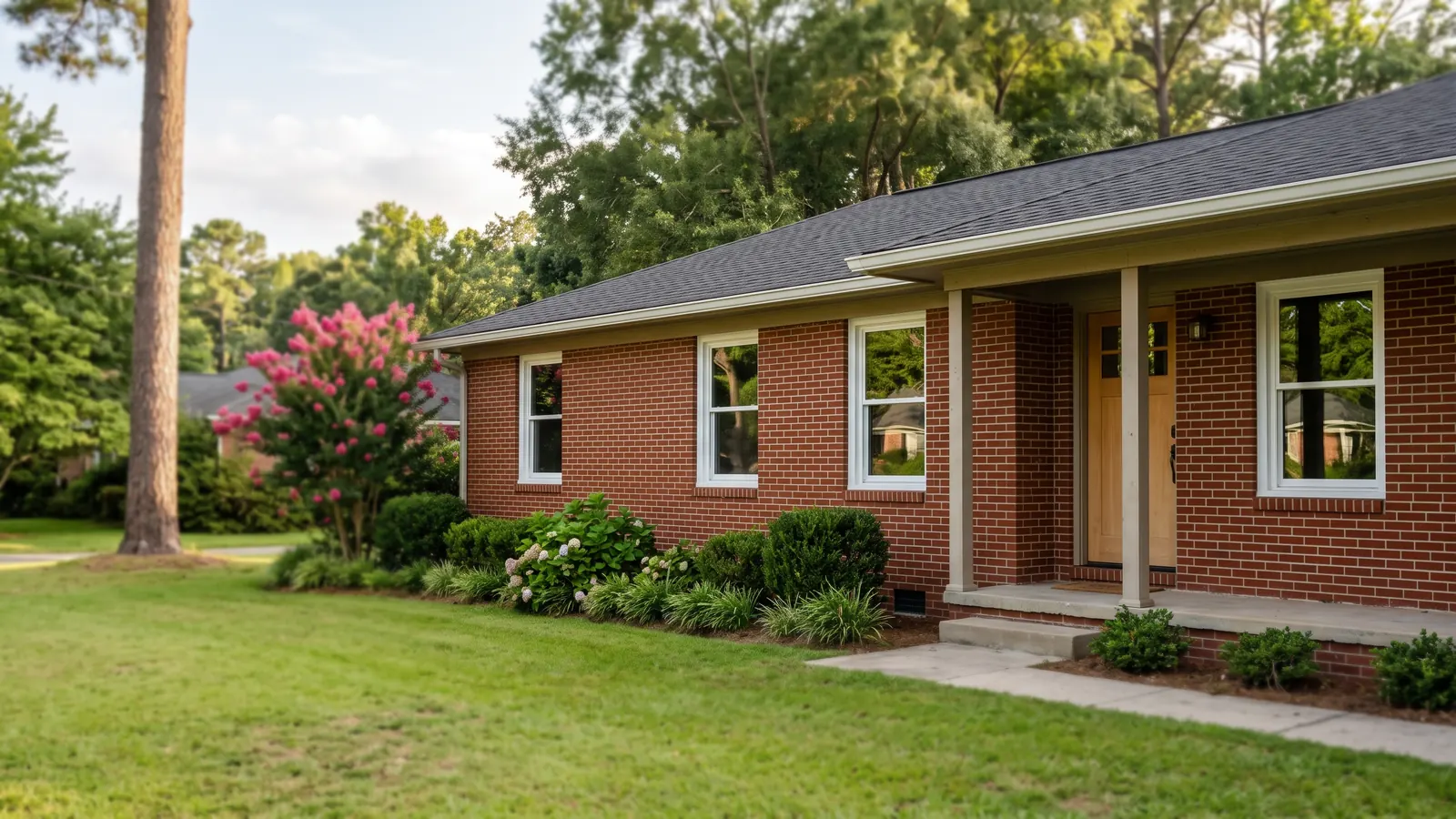
Sliding Glass Door and Patio Door Options
Start from the opening you have. Most patio doors are a standard 72 by 80 inches, but they run from 30 to 96 inches wide and 80 to 96 inches tall, and the replacement has to fit the rough opening or the opening has to change.
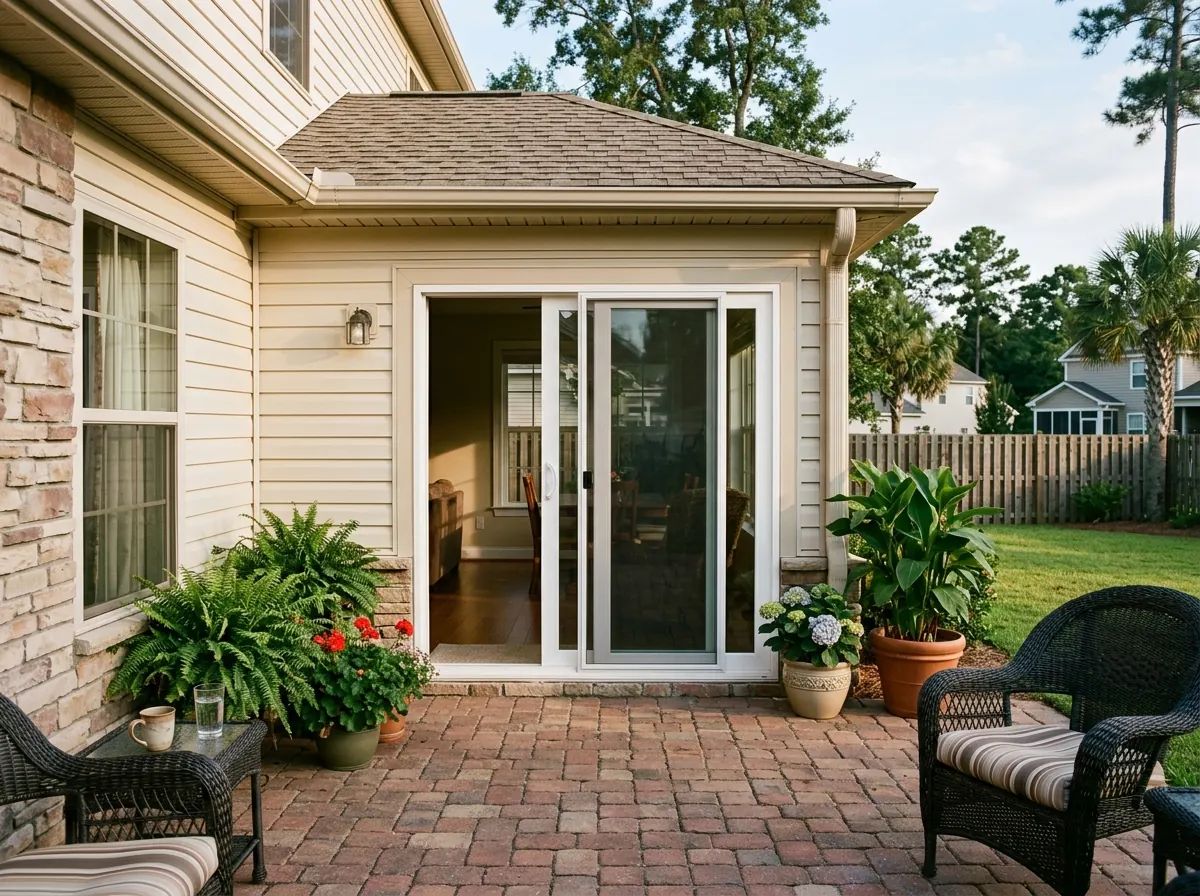
Two-Panel Sliders (XO and OX)
Most sliding doors have two panels, one fixed and one that moves. The handing is read from outside: X is the operating panel, O the fixed one, so an XO door slides on the left and an OX door on the right. Confirm it on the quote: some doors can be flipped on site and some can't. HomeGuide puts a standard two-panel replacement at $700 to $2,400 nationally.
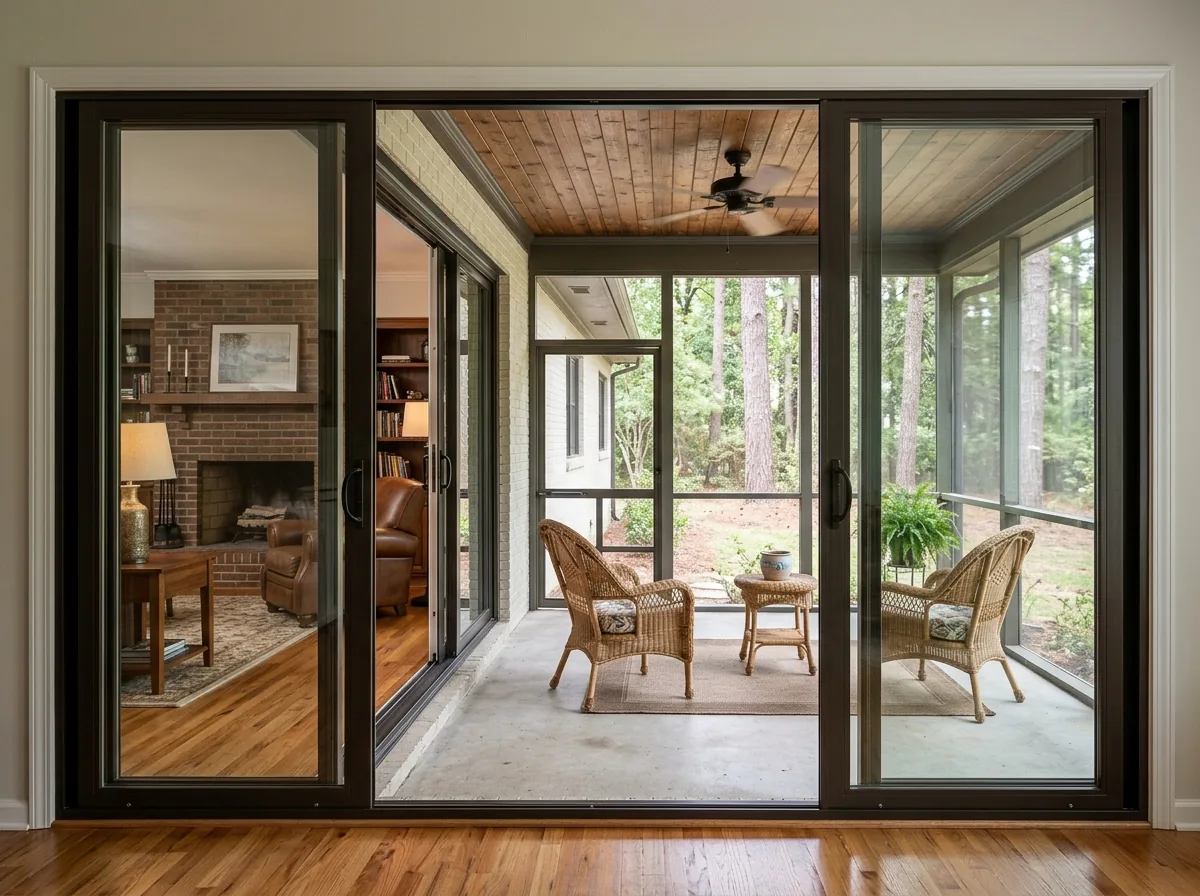
Three- and Four-Panel and Multi-Slide Doors
Wider walls take three or four panels. A four-panel door is usually OXXO, with the two center panels sliding and the outer two fixed. HomeGuide prices a three-panel door at $1,000 to $5,000 and a four-panel at up to $7,000. Telescoping or multi-slide doors let every panel move and stack, at $1,500 to $5,000 installed. Going from two panels to four usually means widening the opening, which is framing and permit work; see retrofit window replacement for the permit rules.
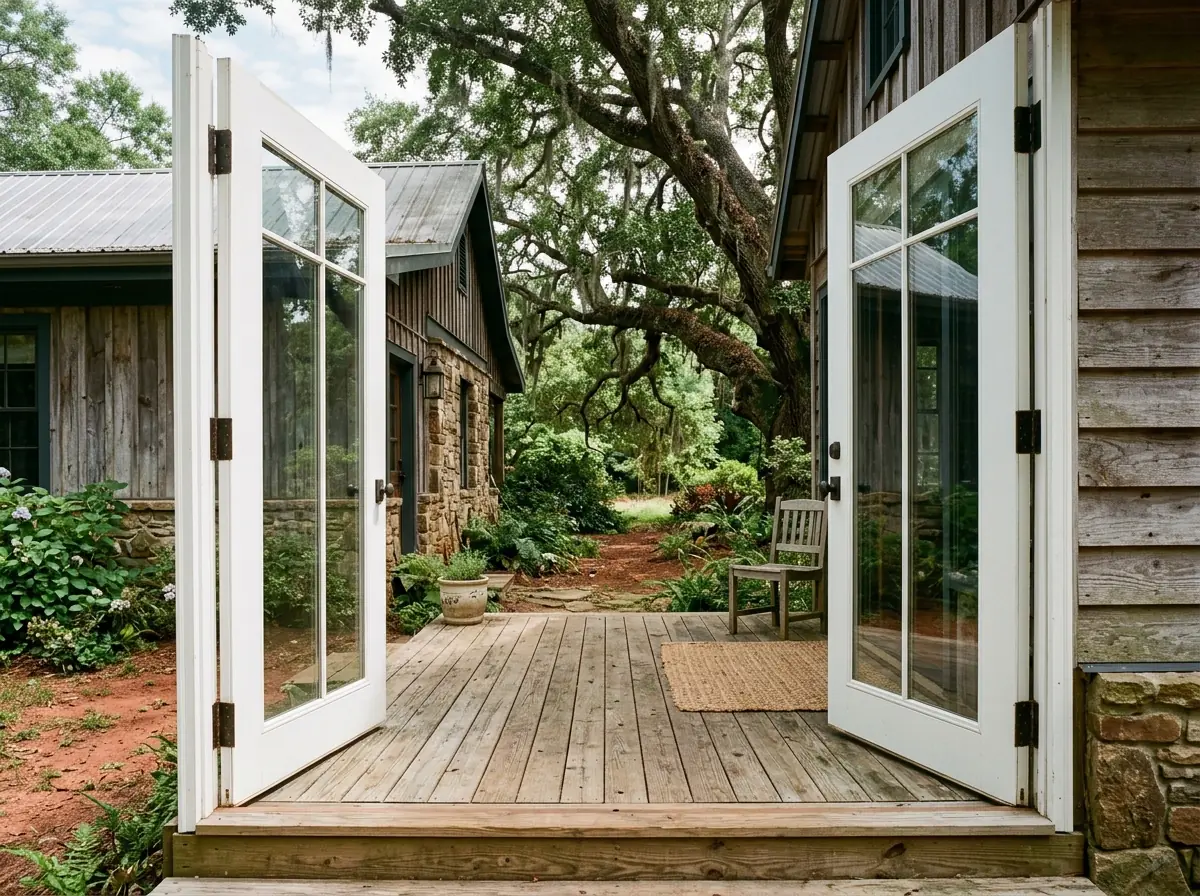
Hinged Patio Doors
A hinged patio door swings like any exterior door, as a single leaf with a fixed sidelite or a pair that opens wide. It needs clear floor for the swing, and it closes against compression weatherstripping instead of sliding past it. ENERGY STAR's air-leakage ceiling is 0.5 cfm per square foot for swinging doors and 0.3 for sliders. Inswing, outswing and sidelite options are covered on french doors.
Frame Materials
HomeGuide's national prices for the door alone:
- Vinyl. $300 to $2,000. Low upkeep and won't rot or corrode in a wet climate, but weaker than fiberglass.
- Aluminum. $250 to $1,600. Strong and slim; look for a thermal break in the frame, or it will conduct heat straight through.
- Fiberglass. $400 to $2,000. Handles all weather, can be made to look like wood, and lasts.
- Clad wood. $800 to $2,800. Paintable wood inside, a low-upkeep cladding outside; the interior side still needs finish care.
Screens, Pet Panels and Locks
A sliding screen door runs $130 to $550 for a patio or sliding door, and in a Columbia summer it's the panel that gets used most. A pet panel, a tall glass insert with a pet door at the bottom, slides into the existing opening without cutting anything, at $130 to $400. For security, a slider can take a deadbolt or a dual-point lock, which pulls the panel tight to the frame at two places instead of one. Ask for the lock to be specified on the quote, since the stock latch on budget doors is often a single hook.
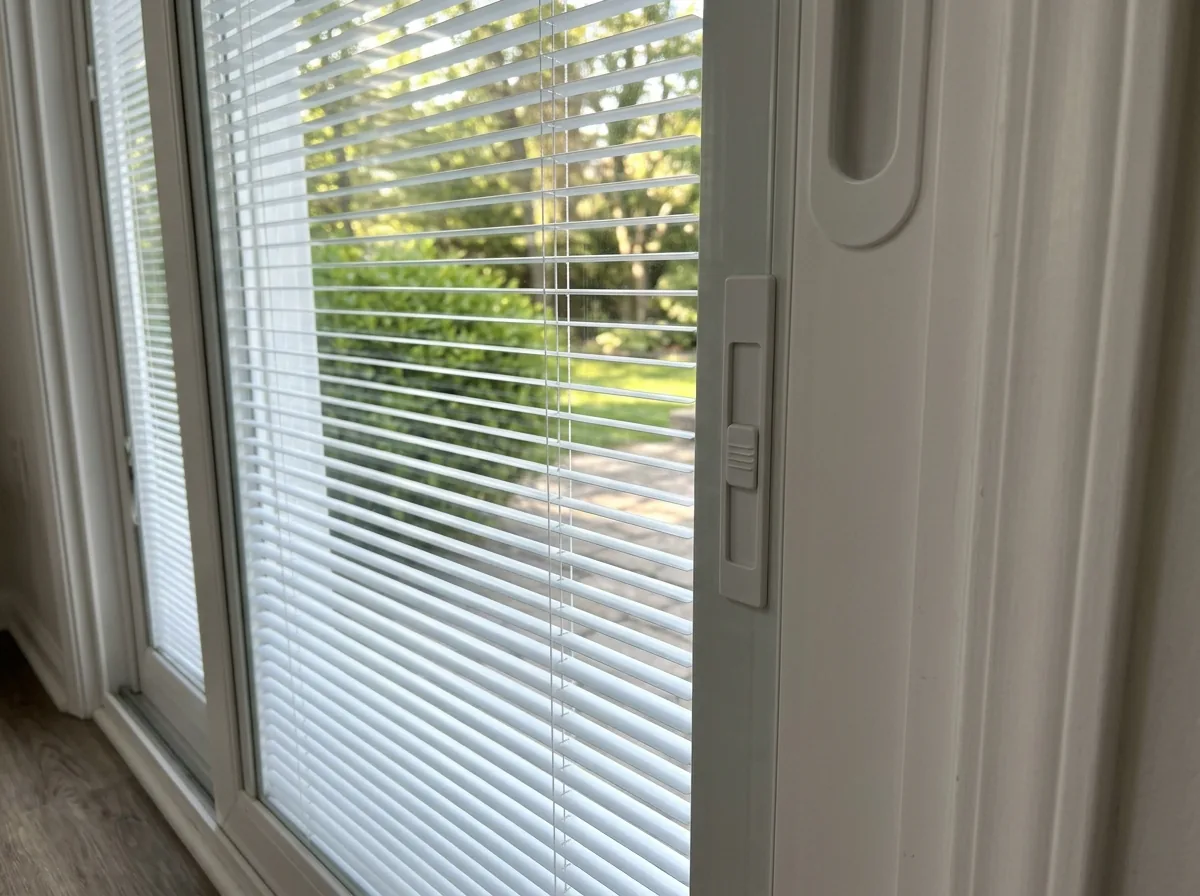
Glass Options and Between-Glass Blinds
Doors with blinds sealed between the panes cost $800 to $2,500 before installation. They never need dusting and leave no cords for children or pets. For the glass itself, a door with more than half its area in glass qualifies for ENERGY STAR in the South-Central zone with U-0.28 and SHGC 0.23 as the ceilings. What those numbers mean, and how the coatings and gas fills get there, is on energy-efficient windows.
Why Columbia homeowners call Columbia Window Co.
- Your request goes to one independent local window installer, not a list of callers
- The installer measures each opening in person before any price
- Ask for a written quote naming the frame, glass package and install method
- Free to homeowners: no fee for the referral or the estimate
Sliding Glass Door Safety Glass and the Etched Mark
South Carolina uses the residential code's safety glazing rules without changes. Under them, glass in the fixed and operating panels of sliding, swinging and bifold doors is a hazardous location, so every pane has to be safety glass. The only exceptions are openings too small for a 3-inch ball to pass through and decorative glazing.
Each pane in a hazardous location carries a permanent mark, acid-etched, sandblasted, fired or laser-etched, that names who applied it, the type of glass and the safety standard it meets, and it has to stay visible after installation. The rule reaches past the door too. A sidelite or nearby window within 24 inches of the door edge, with its bottom edge under 60 inches off the floor, needs safety glass as well.
Two kinds of glass meet the rule. Tempered glass is heat-treated and breaks into small pieces; laminated glass has a plastic layer between sheets and holds together when it cracks. Laminated is the one to ask about for a door facing the street or a busy road: it resists shattering and cuts some noise.
Sliding Glass Door Sill Pans and Threshold Flashing
Old patio doors usually fail at the bottom. Rain runs down the glass, collects in the track, and if the sill was set flat on the subfloor with a bead of caulk, it finds the joint and soaks the plywood and band joist underneath. A soft floor just inside the door is the usual sign.
In Columbia the test comes with summer thunderstorms, when rain hits the glass faster than the track can drain. Weep holes in the bottom of the frame let the track empty to the outside. Keep them clear of pine needles and pollen, and ask the installer to show you where they are on the new door.
The code is specific here. Flashing at door openings follows the door maker's installation instructions; where those don't cover it, a pan flashing goes under the sill, sealed or sloped to send water to the outside of the wall. Air sealing goes around the inside of the rough opening gap. Where a deck or porch attaches to the house below the door, that joint needs flashing of its own. Ask the installer three things:
- STEP01Is a sill pan going in, formed or site-built, and does it slope to the outside?
- STEP02Will the rotted subfloor or framing be cut out and replaced if the old sill has leaked, and at what price?
- STEP03How does the new threshold tie into the deck ledger flashing, if there is a deck?
Leaks around windows elsewhere in the house are covered on window leak repair.
Sliding Glass Door Replacement Cost Benchmarks
HomeGuide's national figures for the full job:
New door installed
$600 to $6,000.Replacing an existing door
$700 to $6,500.Labor alone
$200 to $1,000.Removing and hauling off the old door
$100 to $500.
A single replacement panel runs $450 to $700, but only if it's the same size and from the same maker as the door; replacement glass for one panel is $300 to $650. Rollers, tracks and locks on a door you're keeping are a repair job, covered on sliding glass door repair.